


-4%
 Baby Mom
 Diabetic Care
 Health Devices
 Medicines
 Personal Care
 Sexual Wellbeing
 Vital Wellness
 Vitamins Supplements
 Women Care
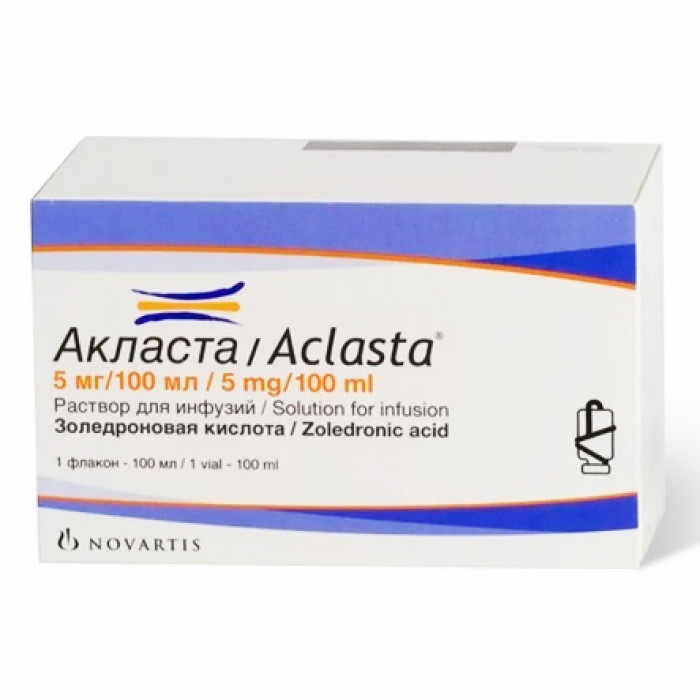
Manufacturer: Sandoz/Novartis
Generic: Zoledronic Acid
Type: Infusion
Pack Size: 1 Pc

Hurry and get discounts on all Apple devices up to 20%
Sale_coupon_15
38,200.00৳ Original price was: 38,200.00৳ .36,672.00৳ Current price is: 36,672.00৳ .
Zoledronic Acid belongs to the bisphosphonate class and primarily targets bones. It inhibits osteoclast-mediated bone resorption due to its high affinity for mineralized bone. After intravenous administration, it rapidly localizes at areas of high bone turnover. Zoledronic Acid’s main target is the enzyme farnesyl pyrophosphate synthase in osteoclasts. Its long-lasting effect is due to its strong binding to bone minerals.
Aclasta is used for the following conditions:
The optimal treatment duration is not fully established. For patients with a low fracture risk, discontinuing the drug after 3–5 years of use should be considered.
Use only as directed by a registered physician.
Consider re-treatment in cases of relapse or inadequate response, based on serum alkaline phosphatase levels or persistent symptoms.
Baby Mom
Diabetic Care
Health Devices
Medicines
Personal Care
Sexual Wellbeing
Vital Wellness
Vitamins Supplements
Women Care