


-5%

 Baby Mom
 Diabetic Care
 Health Devices
 Medicines
 Personal Care
 Sexual Wellbeing
 Vital Wellness
 Vitamins Supplements
 Women Care
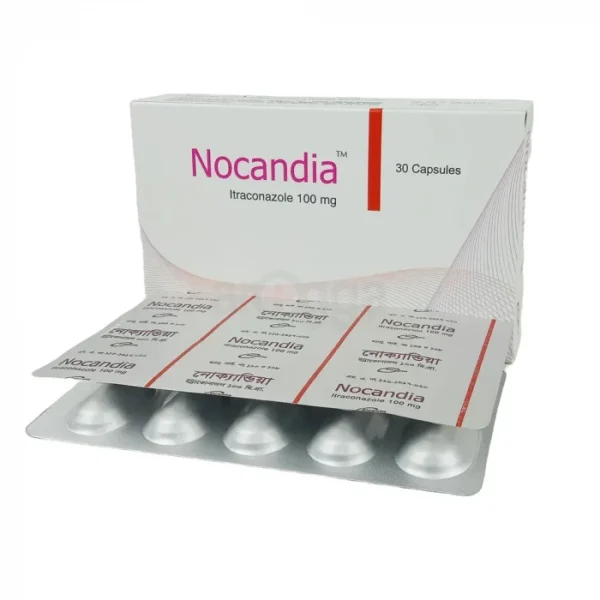
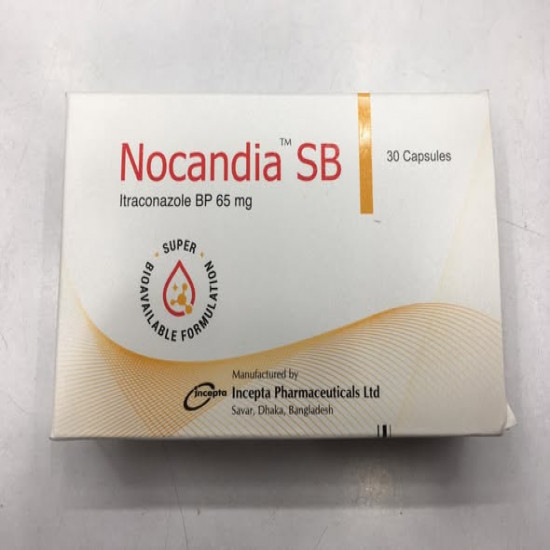
Manufacturer: Incepta Pharmaceuticals Ltd.
Generic: Itraconazole
Type: Capsule
Pack Size: 8pcs

Hurry and get discounts on all Apple devices up to 20%
Sale_coupon_15
224.00৳ Original price was: 224.00৳ .212.80৳ Current price is: 212.80৳ .
Itraconazole exerts its antifungal activity by inhibiting cytochrome P450–dependent enzymes, thereby blocking the synthesis of ergosterol, an essential component of fungal cell membranes. Disruption of ergosterol production leads to altered membrane permeability, impaired enzyme function, abnormal cell wall formation, and accumulation of intracellular lipids, ultimately inhibiting fungal growth and viability.
Nocandia utilizes SUBA (Super Bio-Available) technology, which enhances the oral bioavailability of itraconazole. This technology employs a solid dispersion of the drug within a polymer matrix, significantly improving dissolution and absorption compared to conventional crystalline formulations. As a result, SUBA itraconazole demonstrates a broad antifungal spectrum and improved pharmacokinetic profile.
Nocandia is indicated for the treatment of a wide range of superficial and systemic fungal infections, including:
It is also used in serious systemic fungal infections such as candidiasis, aspergillosis, and cryptococcosis (including cryptococcal meningitis). Additionally, Nocandia is prescribed for maintenance therapy in AIDS patients to prevent relapse of fungal infections and for prophylaxis during prolonged neutropenia.
Baby Mom
Diabetic Care
Health Devices
Medicines
Personal Care
Sexual Wellbeing
Vital Wellness
Vitamins Supplements
Women Care