


-5%
 Baby Mom
 Diabetic Care
 Health Devices
 Medicines
 Personal Care
 Sexual Wellbeing
 Vital Wellness
 Vitamins Supplements
 Women Care

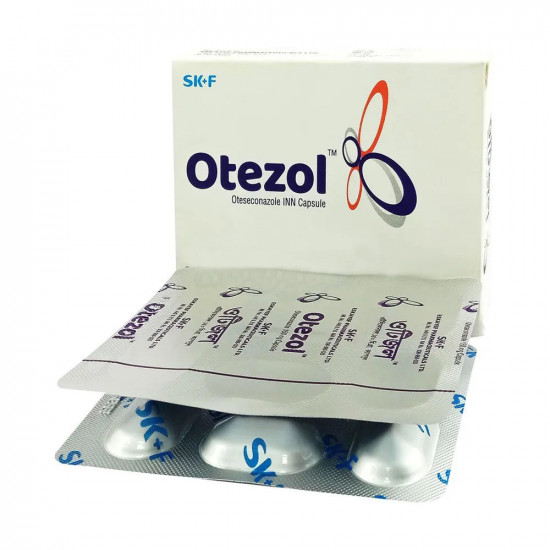
Manufacturer: SK+F
Generic: Oteseconazole
Type: Capsule
Pack Size: 6 Pcs

Hurry and get discounts on all Apple devices up to 20%
Sale_coupon_15
1,200.00৳ Original price was: 1,200.00৳ .1,140.00৳ Current price is: 1,140.00৳ .
Otezol is indicated to reduce the incidence of recurrent vulvovaginal candidiasis (RVVC) in females with a history of RVVC who are not of reproductive potential. If specimens for fungal culture are obtained prior to therapy, antifungal therapy may be instituted before the results of the cultures are known. However, once these results become available, antifungal therapy should be adjusted accordingly.
Oteseconazole is an antifungal agent whose precise exposure-response relationship and timeline of pharmacologic action have not been fully established. It functions by inhibiting CYP51 (14α-demethylase), a key enzyme involved in the early stages of ergosterol synthesis, which is vital for the development and stability of fungal cell membranes. By blocking this enzyme, oteseconazole leads to the build-up of 14-methylated sterols, compounds that are harmful to fungal cells. Its tetrazole-based structure allows it to bind metal ions, enhancing its selectivity for fungal enzymes and minimizing interaction with human CYP enzymes.
Baby Mom
Diabetic Care
Health Devices
Medicines
Personal Care
Sexual Wellbeing
Vital Wellness
Vitamins Supplements
Women Care