


-5%
 Baby Mom
 Diabetic Care
 Health Devices
 Medicines
 Personal Care
 Sexual Wellbeing
 Vital Wellness
 Vitamins Supplements
 Women Care

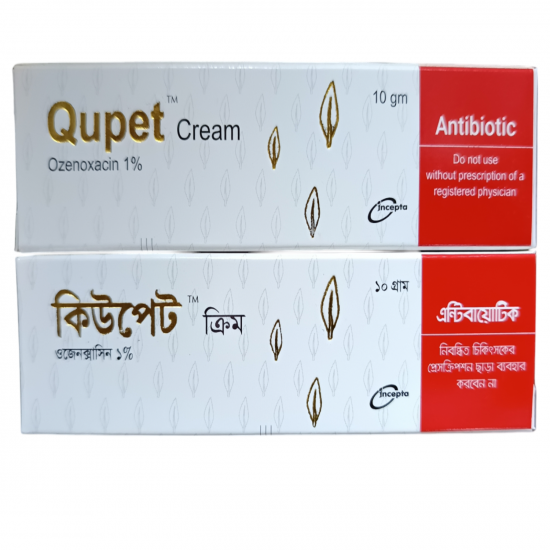
Manufacturer: Incepta Pharmaceuticals Ltd.
Generic: Ozenoxacin
Type: Tube
Pack Size: 1 Pc

Hurry and get discounts on all Apple devices up to 20%
Sale_coupon_15
250.00৳ Original price was: 250.00৳ .237.50৳ Current price is: 237.50৳ .
Qupet 1% Cream contains Ozenoxacin, a quinolone antibiotic medicine. It works by inhibiting the protein synthesis responsible for bacterial cell growth. Thus, it kills the bacteria and treats bacterial infections. It is mainly caused by organisms such as Staphylococcus aureus or Streptococcus pyogenes.
Qupet is indicated for the topical treatment of impetigo caused by Staphylococcus aureus or Streptococcus pyogenes in adult and pediatric patients aged 2 months and older.
Ozenoxacin is a quinolone-class antibacterial agent that exerts its bactericidal activity by inhibiting bacterial DNA synthesis. It specifically targets DNA gyrase A and topoisomerase IV, enzymes essential for bacterial DNA replication, transcription, and repair. Ozenoxacin demonstrates potent bactericidal activity against S. aureus and S. pyogenes.
Pharmacokinetic evaluations involving 110 subjects assessed systemic absorption using various strengths of ozenoxacin cream, including concentrations up to 2% (twice the marketed strength). Studies included both healthy volunteers and patients with impetigo, with single or repeated applications of up to 1 g of cream over intact or abraded skin (up to 200 cm²).
No measurable systemic absorption was detected in 84 out of 86 participants
Minimal absorption at the limit of detection (0.489 ng/mL) was observed in only 2 subjects
Ozenoxacin exhibits moderate plasma protein binding (approximately 80–85%), which appears independent of drug concentration. Due to negligible systemic exposure, tissue distribution studies in humans have not been conducted.
The drug is not metabolized by human skin and undergoes only minimal hepatic metabolism, as demonstrated in studies using human hepatocytes.
Excretion pathways in humans have not been studied, as systemic absorption following topical use is clinically insignificant.
Baby Mom
Diabetic Care
Health Devices
Medicines
Personal Care
Sexual Wellbeing
Vital Wellness
Vitamins Supplements
Women Care