


-1%
 Baby Mom
 Diabetic Care
 Health Devices
 Medicines
 Personal Care
 Sexual Wellbeing
 Vital Wellness
 Vitamins Supplements
 Women Care


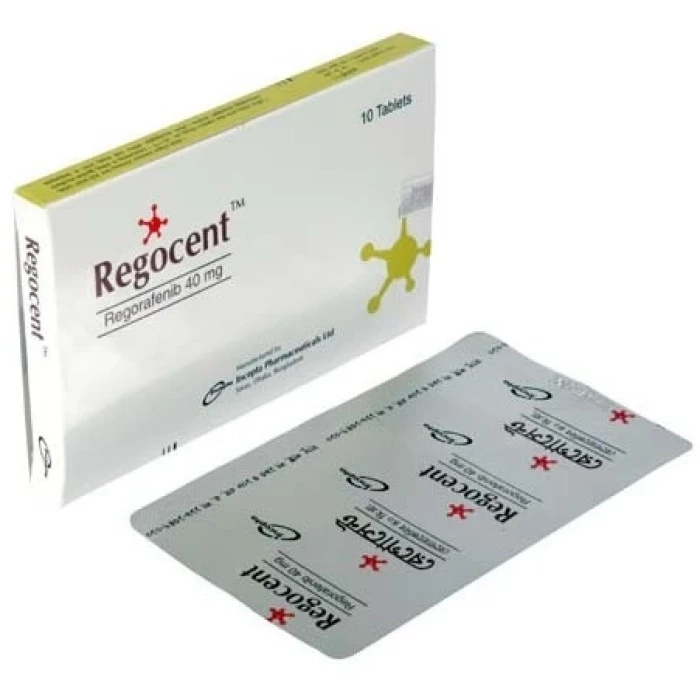
Manufacturer: Incepta Pharmaceuticals Ltd.
Generic: Regorafenib
Type: Tablet
Pack Size: 10 Pcs

Hurry and get discounts on all Apple devices up to 20%
Sale_coupon_15
2,000.00৳ Original price was: 2,000.00৳ .1,980.00৳ Current price is: 1,980.00৳ .
Regocent is classified as a targeted cancer therapy for various malignancies, including metastatic colorectal cancer, GIST, and hepatocellular carcinoma.
Regocent (Regorafenib) is a small molecule that works by inhibiting multiple kinases associated with cellular functions and abnormal processes like cancer, tumor blood vessel formation (angiogenesis), metastasis, and immune response to tumors. Regorafenib and its active metabolites (M-2 and M-5) block the activities of various receptors like RET, VEGFR1-3, KIT, PDGFR, FGFR1-2, and others, which are essential for the development and spread of tumors. Preclinical studies showed that Regorafenib inhibited tumor growth in several models, including those for colorectal cancer, GIST, and HCC.
Absorption, Distribution, Metabolism, and Elimination:
Baby Mom
Diabetic Care
Health Devices
Medicines
Personal Care
Sexual Wellbeing
Vital Wellness
Vitamins Supplements
Women Care