


-1%
 Baby Mom
 Diabetic Care
 Health Devices
 Medicines
 Personal Care
 Sexual Wellbeing
 Vital Wellness
 Vitamins Supplements
 Women Care

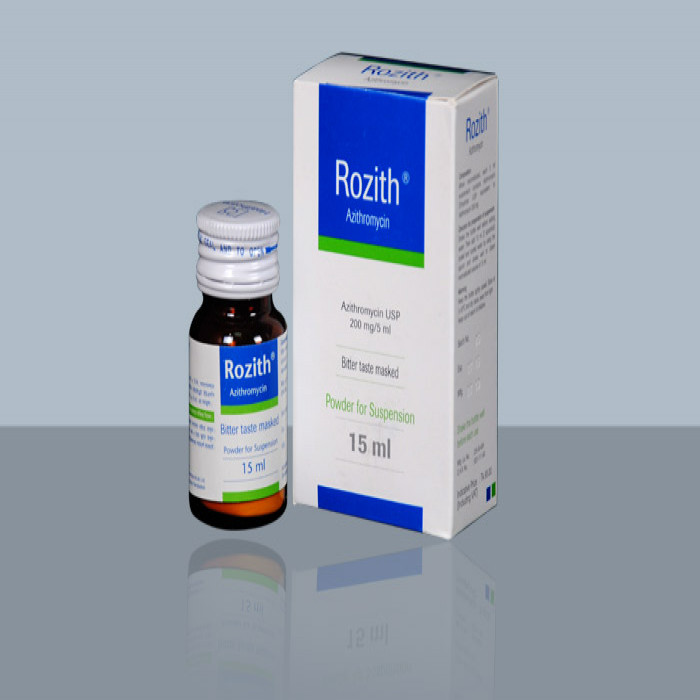
Manufacturer: Healthcare Pharmacuticals Ltd.
Generic: Azithromycin
Type: Suspension
Pack Size: 15ml

Hurry and get discounts on all Apple devices up to 20%
Sale_coupon_15
95.00৳ Original price was: 95.00৳ .94.05৳ Current price is: 94.05৳ .
Rozith is indicated for the treatment of infections caused by susceptible microorganisms, including:
Azithromycin is a macrolide antibiotic that remains stable in acidic gastric conditions, allowing effective oral administration without the need for acid protection. It is rapidly absorbed from the gastrointestinal tract, with absorption enhanced when taken on an empty stomach. Peak plasma concentrations are generally achieved within 2.1 to 3.2 hours after oral dosing.
The drug is actively transported by phagocytic cells to sites of infection, where it is released during the inflammatory response. Because of its high lipid solubility and ion-trapping characteristics, tissue concentrations may exceed plasma concentrations by more than 50-fold, resulting in prolonged antibacterial activity.
Azithromycin has a long elimination half-life of approximately 68 hours, allowing convenient once-daily dosing and shorter treatment durations while maintaining therapeutic concentrations in infected tissues. Elimination occurs mainly through biliary excretion as an unchanged drug, with approximately 6% of the administered dose excreted unchanged in urine over one week.
Azithromycin inhibits bacterial protein synthesis by binding to the 50S ribosomal subunit of susceptible bacteria. This action prevents bacterial growth without affecting nucleic acid synthesis.
Azithromycin demonstrates activity against a broad range of susceptible microorganisms, including:
Gram-positive bacteria
Gram-negative bacteria
Other susceptible organisms
Anaerobic organisms
Beta-lactamase production does not significantly reduce the antibacterial activity of azithromycin.
Adults
For uncomplicated Chlamydia trachomatis infections
Weight-based suspension dosing:
Typhoid Fever
Community-Acquired Pneumonia
Pelvic Inflammatory Disease
Pediatric Use
* রেজিস্টার্ড চিকিৎসকের পরামর্শ মোতাবেক ঔষধ সেবন করুন।
For optimal absorption, Rozith should preferably be taken 1 hour before or 2 hours after meals.
* রেজিস্টার্ড চিকিৎসকের পরামর্শ মোতাবেক ঔষধ সেবন করুন।
Rozith should not be used in patients with:
Rozith is generally well tolerated, and most adverse reactions are mild to moderate.
Common adverse effects include:
Less common reactions include:
Rare but serious adverse effects:
Pregnancy Category: B
Animal studies have not demonstrated fetal harm; however, adequate controlled studies in pregnant women are lacking. Rozith should be used during pregnancy only when the expected benefit outweighs the potential risk.
It is unknown whether azithromycin is excreted in human breast milk. Therefore, caution should be exercised when administering Rozith to breastfeeding mothers.
No dosage adjustment is required for patients with mild renal impairment (creatinine clearance >40 mL/min). Use cautiously in patients with severe renal dysfunction.
Because azithromycin is primarily eliminated through the liver, it should be avoided in patients with significant hepatic disease.
Azithromycin is not expected to impair the ability to drive or operate machinery. However, patients experiencing dizziness should avoid such activities.
Symptoms of overdose may include:
Management consists of symptomatic and supportive treatment, including gastric lavage where appropriate.
Macrolide Antibiotic
Store below room temperature in a cool, dry place, protected from heat, moisture, and direct light. Keep out of the reach of children.
Baby Mom
Diabetic Care
Health Devices
Medicines
Personal Care
Sexual Wellbeing
Vital Wellness
Vitamins Supplements
Women Care