


-5%
 Baby Mom
 Diabetic Care
 Health Devices
 Medicines
 Personal Care
 Sexual Wellbeing
 Vital Wellness
 Vitamins Supplements
 Women Care

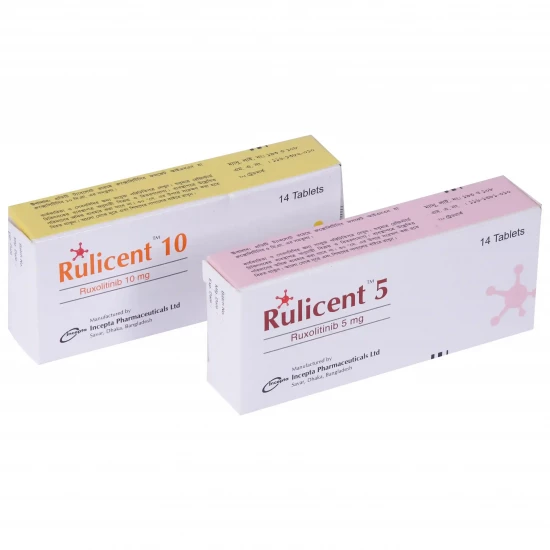
Manufacturer: Incepta Pharmaceuticals Ltd.
Generic: Ruxolitinib
Type: Tablet
Pack Size: 7pcs

Hurry and get discounts on all Apple devices up to 20%
Sale_coupon_15
2,100.00৳ Original price was: 2,100.00৳ .1,995.00৳ Current price is: 1,995.00৳ .
Rulicent is approved for the treatment of several hematologic and immune-mediated conditions in adults and selected pediatric populations:
Pregnancy: There is no conclusive evidence from human studies. Rulicent should be used during pregnancy only if the potential benefit justifies the risk to the fetus.
Breastfeeding: Unknown if excreted in human milk. Discontinue breastfeeding during treatment and for at least two weeks after the last dose due to potential infant exposure.
Ruxolitinib is an oral selective inhibitor of Janus-associated kinases (JAK1 and JAK2)—enzymes critical for signal transduction from cytokine and growth factor receptors involved in blood cell production and immune regulation.
In myelofibrosis, a condition marked by uncontrolled JAK signaling, Ruxolitinib corrects dysregulation by:
Baby Mom
Diabetic Care
Health Devices
Medicines
Personal Care
Sexual Wellbeing
Vital Wellness
Vitamins Supplements
Women Care