


-2%
 Baby Mom
 Diabetic Care
 Health Devices
 Medicines
 Personal Care
 Sexual Wellbeing
 Vital Wellness
 Vitamins Supplements
 Women Care

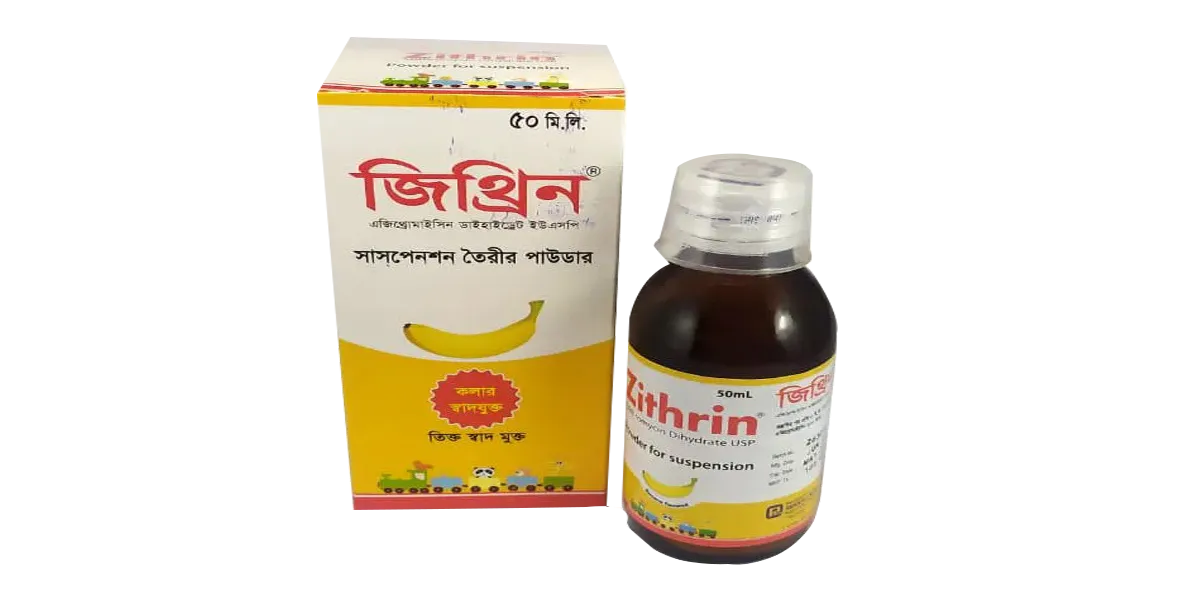
Manufacturer: Renata Limited
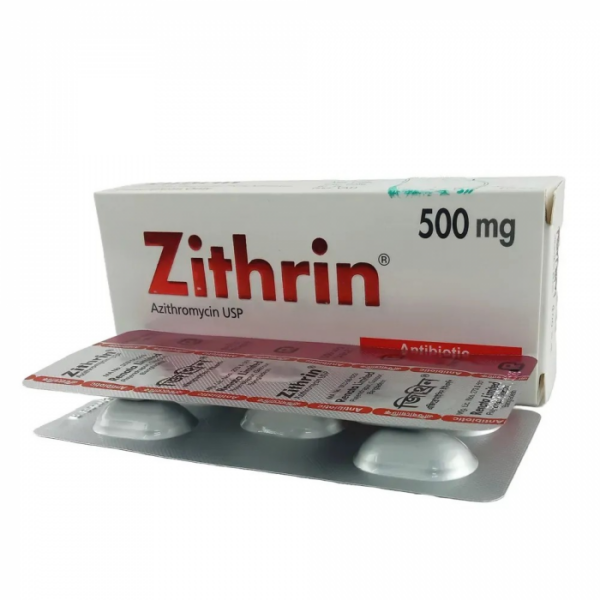
Generic: Azithromycin
Type: Suspension
Pack Size: 1 Pc

Hurry and get discounts on all Apple devices up to 20%
Sale_coupon_15
200.00৳ Original price was: 200.00৳ .196.00৳ Current price is: 196.00৳ .
Azithromycin inhibits bacterial protein synthesis by binding to the 50S ribosomal subunit of susceptible bacteria. This prevents bacterial growth and multiplication without affecting nucleic acid synthesis.
Zithrin is indicated for the treatment of infections caused by susceptible microorganisms. It is commonly prescribed for:
Azithromycin is a macrolide antibiotic that remains stable in acidic conditions, allowing it to be taken orally without requiring protection from stomach acid. It is rapidly absorbed after oral administration, with better absorption when taken on an empty stomach. Peak blood concentrations are generally reached within 2.1 to 3.2 hours in adults.
One of its unique properties is its ability to accumulate inside phagocytic cells, which transport the drug directly to infected tissues. During the body’s immune response, these cells release high concentrations of azithromycin at the site of infection. Tissue concentrations may become more than 50 times higher than plasma levels due to its high lipid solubility and ion-trapping characteristics.
Azithromycin has a prolonged elimination half-life, allowing once-daily dosing while maintaining therapeutic concentrations in infected tissues for several days. Following a single 500 mg oral dose, the drug demonstrates an average plasma clearance of approximately 630 mL/min and a terminal elimination half-life of about 68 hours. The prolonged half-life results from extensive tissue distribution followed by gradual release into circulation.
The drug is eliminated mainly through the bile in an unchanged form, while approximately 6% of the administered dose is excreted unchanged in the urine within one week.
Azithromycin is active against many clinically important microorganisms, including:
Gram-positive bacteria
Gram-negative bacteria
Other susceptible organisms
Anaerobic organisms
- Shake the bottle thoroughly to loosen the dry powder.
- Add previously boiled and cooled water up to the marked line on the bottle.
- Shake well until the suspension becomes completely uniform.
For optimal absorption, take azithromycin at least 1 hour before meals or 2 hours after meals.
Use azithromycin cautiously with the following medicines:
Zithrin should not be used in patients with:
Zithrin is generally well tolerated, and most adverse effects are mild and self-limiting.
Common side effects include:
Less common effects include:
Pregnancy:
Azithromycin is classified as Pregnancy Category B. Animal studies have shown no evidence of fetal harm; however, adequate studies in pregnant women are lacking. It should be used during pregnancy only when clearly needed and when the expected benefit outweighs potential risks.Breastfeeding:
It is not known whether azithromycin is excreted into human breast milk. Therefore, it should be used cautiously in nursing mothers after medical evaluation.
Rare but serious allergic reactions, including angioedema and anaphylaxis, have been reported. Some patients may experience recurrent symptoms requiring prolonged medical management.
Patients should promptly seek medical attention if they develop:
Severe allergic reactions
Persistent diarrhea
Jaundice or signs of liver dysfunction
Irregular heartbeat
Baby Mom
Diabetic Care
Health Devices
Medicines
Personal Care
Sexual Wellbeing
Vital Wellness
Vitamins Supplements
Women Care