


-2%
 Baby Mom
 Diabetic Care
 Health Devices
 Medicines
 Personal Care
 Sexual Wellbeing
 Vital Wellness
 Vitamins Supplements
 Women Care
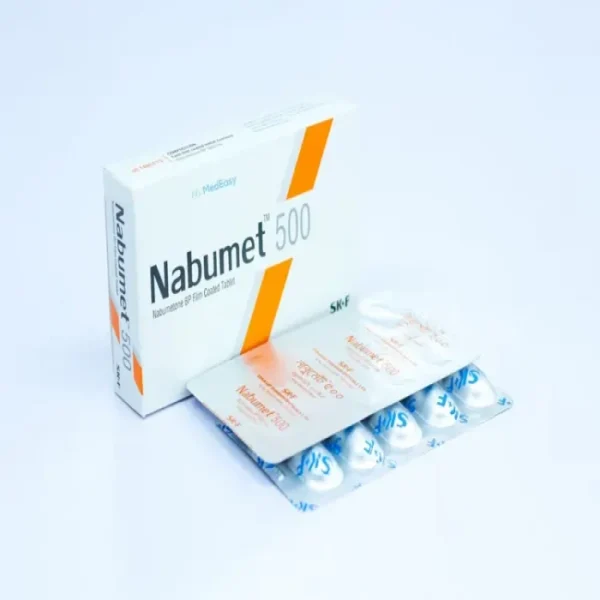
Manufacturer: Unimed & Unihealth Manufacturers Ltd.
Generic: Nabumetone
Type: Tablet
Pack Size: 10pcs

Hurry and get discounts on all Apple devices up to 20%
Sale_coupon_15
220.00৳ Original price was: 220.00৳ .215.60৳ Current price is: 215.60৳ .
Nabuflex 500 mg is prescribed for the symptomatic management of osteoarthritis and rheumatoid arthritis. Before initiating therapy, the expected therapeutic benefits should be carefully weighed against potential risks. Treatment should always be initiated at the lowest effective dose and continued for the shortest duration necessary to achieve individual patient goals.
Nabuflex 500 mg (nabumetone) is a naphthylalkanone non-steroidal anti-inflammatory drug (NSAID). It acts as a non-selective cyclooxygenase (COX-1 and COX-2) inhibitor, thereby suppressing prostaglandin synthesis. Prostaglandins play a key role in mediating inflammation, pain, fever, and platelet aggregation.
Nabuflex is administered as a prodrug, which undergoes hepatic metabolism to its active form, 6-methoxy-2-naphthylacetic acid (6-MNA). This metabolite is a potent inhibitor of prostaglandin synthesis and is primarily responsible for the drug’s analgesic, anti-inflammatory, and antipyretic effects.
Following hepatic conversion to 6-MNA, Nabuflex inhibits COX-1 and COX-2 enzymes, leading to reduced formation of prostaglandins involved in pain, inflammation, and fever. This mechanism underlies its therapeutic action in inflammatory joint disorders.
Osteoarthritis and Rheumatoid Arthritis (Adults):
Initial recommended dose: 1000 mg once daily, with or without food
Depending on clinical response, the dose may be increased to 1500–2000 mg per day, given as a single dose or divided into two doses
Doses exceeding 2000 mg/day have not been adequately studied
Use the lowest effective dose for long-term therapy
Patients weighing <50 kg:
Often respond adequately to 1000 mg/day
Dose adjustment should be based on individual response
Renal Impairment:
Moderate renal insufficiency: Maximum starting dose 750 mg once daily
Severe renal insufficiency: Maximum starting dose 500 mg once daily
With careful monitoring, daily doses may be increased up to 1500 mg and 1000 mg, respectively
Pediatric Use:
Safety and efficacy in children have not been established
Concomitant use with ACE inhibitors may reduce the antihypertensive effect of these agents
Caution is advised when Nabuflex is used alongside other NSAIDs or nephrotoxic agents
Nabuflex 500 mg is contraindicated in patients with:
Known hypersensitivity to nabumetone or any formulation component
History of asthma, urticaria, or allergic reactions following aspirin or other NSAIDs
Use for peri-operative pain in coronary artery bypass graft (CABG) surgery
Gastrointestinal:
Diarrhea, dyspepsia, abdominal discomfort, constipation, flatulence, nausea, vomiting, gastritis, stomatitis, dry mouth, and positive fecal occult blood
Central Nervous System:
Headache, dizziness, fatigue, somnolence, insomnia, nervousness, increased sweating
Dermatologic:
Rash, pruritus
Special Senses:
Tinnitus
Miscellaneous:
Peripheral edema
Pregnancy:
Category C
Animal studies have not demonstrated teratogenic effects, but adequate human studies are lacking
Use during pregnancy only if the potential benefit outweighs the potential risk
Use during the third trimester is not recommended due to the risk of premature closure of the ductus arteriosus
Lactation:
Nabuflex is not recommended during breastfeeding due to the potential risk of adverse effects in nursing infants
Long-term NSAID use may cause renal toxicity, including renal papillary necrosis
Patients at increased risk include those with renal impairment, heart failure, liver dysfunction, dehydration, diuretic use, and the elderly
Renal function should be monitored during prolonged therapy
Discontinuation of the drug generally leads to recovery of renal function
Symptoms of overdose may include lethargy, drowsiness, nausea, vomiting, epigastric pain, and gastrointestinal bleeding. Rarely, severe effects such as hypertension, acute renal failure, respiratory depression, or coma may occur.
Management consists of supportive and symptomatic care. Activated charcoal may be considered if ingestion occurred within 4 hours. There is no specific antidote. Hemodialysis is generally ineffective due to high protein binding. Overdoses of up to 25 g have been reported without long-term adverse outcomes following appropriate emergency treatment.
Store in a cool, dry place, protected from light and moisture.
Keep out of the reach of children.
Pediatric patients: Not established
Geriatric patients: Use with caution due to increased risk of renal and gastrointestinal adverse effects
Baby Mom
Diabetic Care
Health Devices
Medicines
Personal Care
Sexual Wellbeing
Vital Wellness
Vitamins Supplements
Women Care