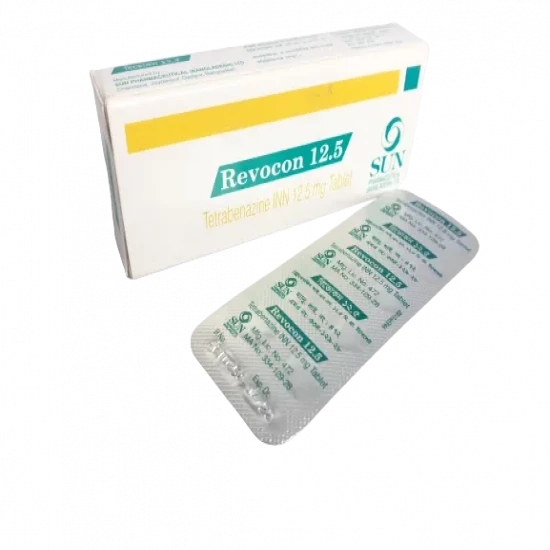
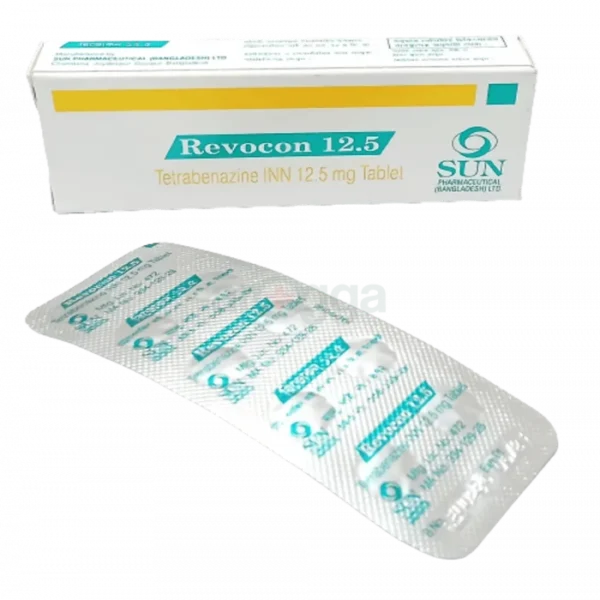
Tetrabenazine is indicated for the management of chorea associated with Huntington’s disease.
At doses of 50 mg, tetrabenazine has been shown to prolong the QTc interval. Preclinical studies indicate that tetrabenazine and its metabolites bind to melanin-containing tissues such as the skin and eyes; radioactivity remained detectable in these tissues up to 21 days after a single oral dose in animal models.
Tetrabenazine acts as a reversible inhibitor of human vesicular monoamine transporter type 2 (VMAT2) with a Ki of approximately 100 nM. By inhibiting VMAT2 in the basal ganglia, it depletes monoamine neurotransmitters including dopamine, serotonin, and norepinephrine. The reduction in dopamine transmission, which is essential for coordinated motor activity, contributes to its effectiveness in controlling hyperkinetic movements. Tetrabenazine exhibits minimal affinity for dopamine D₂ receptors in vitro (Ki ≈ 2100 nM).