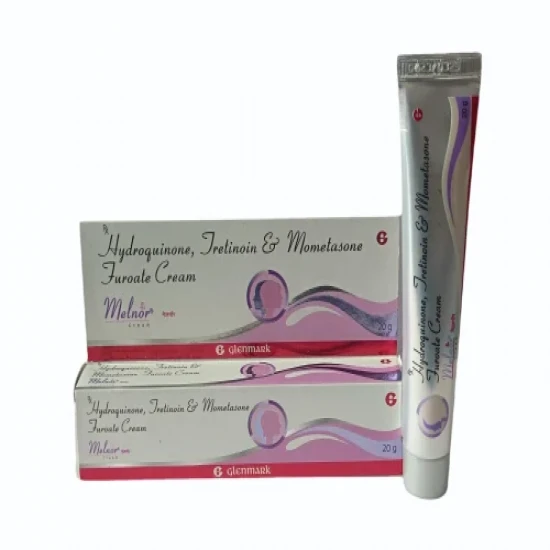
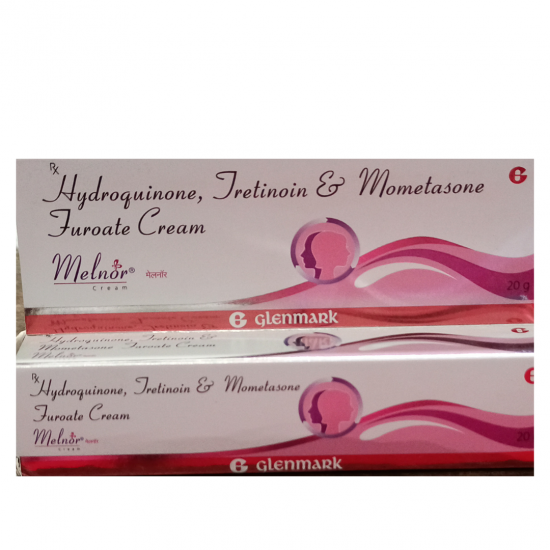
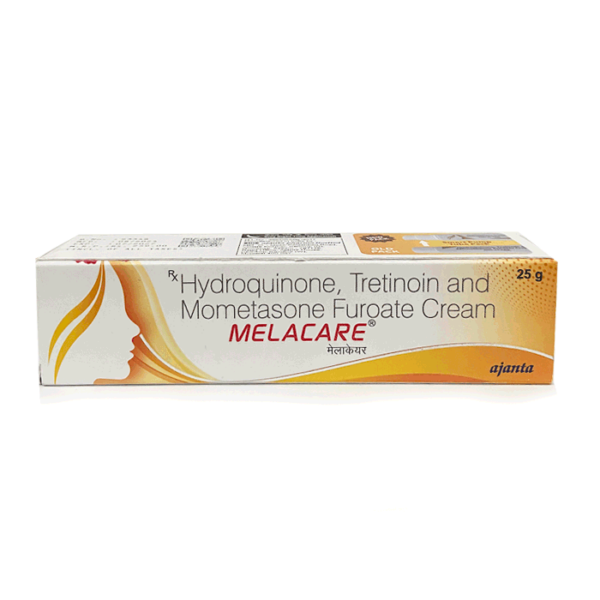
Melnor Cream is used for the short-term treatment of mild to moderate melasma and other pigmentation disorders. Melnor Cream is not recommended for use in babies, as it contains active ingredients that may be too strong and potentially harmful to their delicate skin.
- Use sunscreen to protect from damaging UV light, which increases pigmentation.
- Limit time in direct sunlight, especially during peak hours.
- Use mild and hypoallergenic skin care products to minimise irritation.
- For more targeted advice, consult a dermatologist who can recommend specific skincare products and procedures tailored to your skin type and melasma severity.
- Avoid aggressive exfoliation or harsh scrubs that can worsen pigmentation.
- If melasma is related to hormonal changes, consult a doctor for hormone management options.
Melnor Cream helps lighten dark patches, blemishes, scars, and under-eye dark circles, and works best when used along with proper sun protection measures.
- Clean the affected area and dry it thoroughly.
- Apply a thin layer of the product over the affected area.
- Place the cap tightly after use.
- Wash your hands thoroughly after applying the cream.
- Avoid getting the cream in your mouth, eyes, or mucous membrane.
- Avoid going in the sunlight or UV light
Melnor Cream contains the following components:
- Hydroquinone (2% w/w): It is a skin-lightening agent that works by inhibiting the production of melanin, the pigment responsible for skin colour. It helps to fade dark patches and even out skin tone.
- Tretinoin (0.025% w/w): It is a retinoid, which is a derivative of vitamin A. It promotes skin cell turnover and exfoliation, helping to remove the pigmented cells on the skin’s surface.
- Mometasone (0.1% w/w): It is a corticosteroid with anti-inflammatory properties. It helps reduce skin inflammation and redness, which can be associated with melasma