


-5%
 Baby Mom
 Diabetic Care
 Health Devices
 Medicines
 Personal Care
 Sexual Wellbeing
 Vital Wellness
 Vitamins Supplements
 Women Care


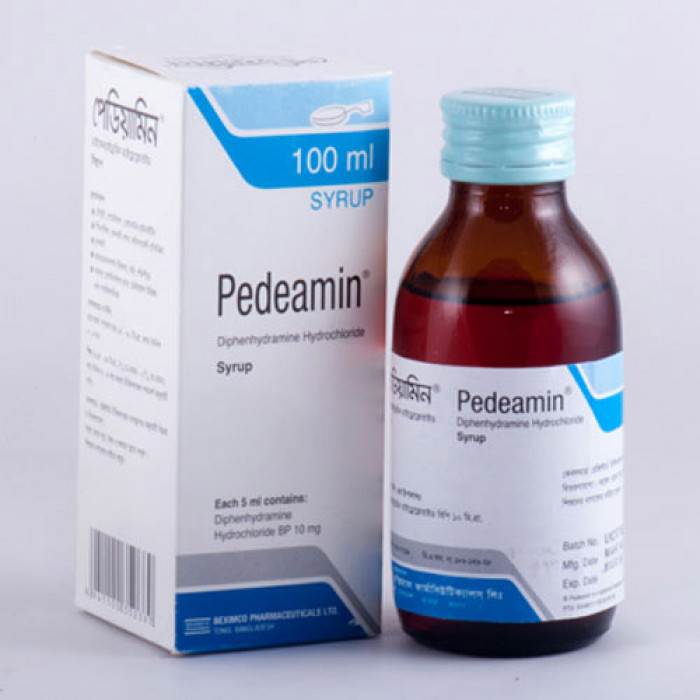
Manufacturer: Beximco Pharmaceuticals Ltd.
Generic: Diphenhydramine Hydrochloride
Type: Syrup
Pack Size: 100ml

Hurry and get discounts on all Apple devices up to 20%
Sale_coupon_15
45.00৳ Original price was: 45.00৳ .42.75৳ Current price is: 42.75৳ .
Pedeamin Syrup is indeed an antihistamine medication used to relieve symptoms associated with allergies, hay fever, and the common cold. It can effectively alleviate symptoms such as rash, itching, watery eyes, itchy eyes/nose/throat, cough, runny nose, and sneezing by blocking the action of histamine, a natural substance produced by the body during an allergic reaction.
Additionally, Pedeamin Syrup is commonly used to prevent and treat symptoms of motion sickness, including nausea, vomiting, and dizziness. Its ability to block another natural substance called acetylcholine contributes to its drying effects, reducing symptoms like watery eyes and runny nose.
It’s important to note that cough-and-cold products containing diphenhydramine are generally not recommended for children under 6 years of age unless specifically directed by a doctor. Long-acting tablets or capsules may not be suitable for children under 12 years of age. It’s essential to follow the specific instructions provided by your healthcare provider or the product’s packaging when using diphenhydramine or any other medication.
Furthermore, it is crucial to use cough-and-cold products with caution and adhere to proper dosage directions to minimize the risk of serious side effects. It’s important not to use diphenhydramine or similar medications to induce sleep in children. Avoid giving multiple cough-and-cold medications that contain the same or similar ingredients simultaneously to prevent potential overdose. It is advisable to consult a doctor or pharmacist for alternative ways to relieve coughs and cold symptoms, such as staying hydrated, using a humidifier, or using saline nose drops or spray.
Baby Mom
Diabetic Care
Health Devices
Medicines
Personal Care
Sexual Wellbeing
Vital Wellness
Vitamins Supplements
Women Care