


-5%
 Baby Mom
 Diabetic Care
 Health Devices
 Medicines
 Personal Care
 Sexual Wellbeing
 Vital Wellness
 Vitamins Supplements
 Women Care

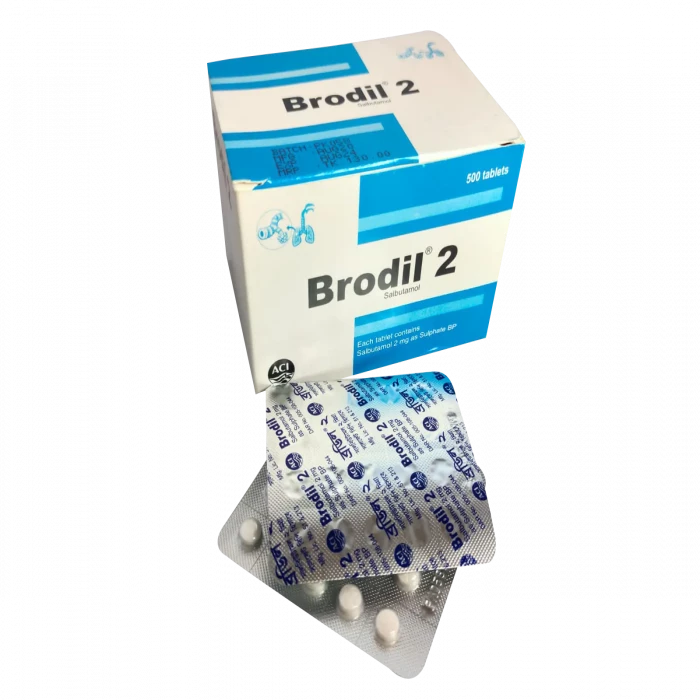
Manufacturer: ACI Limited
Type: Tablet
Pack Size: 20 Pcs

Hurry and get discounts on all Apple devices up to 20%
Sale_coupon_15
5.20৳ Original price was: 5.20৳ .4.94৳ Current price is: 4.94৳ .
Indications
Brodil 2 belongs to a class of drugs known as fast-acting bronchodilators or “relievers.” It is used to treat asthma and chronic obstructive pulmonary disease (COPD) symptoms such as coughing, wheezing, and shortness of breath. Brodil 2 can be taken with or without food. The dose will be determined by your condition and how you react to the medication. Take it at the same time every day if possible. It is critical that you continue to take this medication until your doctor instructs you otherwise.
Pharmacology
Salbutamol is a synthetic sympathomimetic agent with a high affinity for beta-2 adrenergic receptors. Salbutamol causes bronchodilation by stimulating beta-2-adrenergic receptors in bronchial smooth muscles, causing bronchial muscle fibers to relax. Spirometric measurements show an improvement in pulmonary function as a result of this action.
Dosage & Administration
Salbutamol tablet or syrup-
Children:
Adults:
Salbutamol Respirator Solution:
To be used with a suitable nebulizer device under the direction of a physician. The solution must not be injected or ingested.
Method-1 (Intermittent Administration):
Method-2 (Continuous administration):
Salbutamol nebulizer solution: To be used with a suitable nebulizer device under the direction of a physician. The solution must not be injected or ingested.
Adults & Elderly:
Children under 12 years:
Salbutamol injection:
Adults:
Children and Adolescents (<18 years of age):
Salbutamol Inhalation Capsule:
Adults:
Children:
One Salbutamol inhalation capsule is the recommended dose for children 4 years of age and older for relief of acute bronchospasm in the maintenance of episodic asthma or before exercise. For routine maintenance or prophylactic therapy, one inhalation should be administered three or four times per day. If necessary, this dosage can be increased to the inhalation of two inhalation capsules. The bronchodilator effect of each inhaled Salbutamol inhalation capsule administration lasts at least four hours. Such patients should be advised not to increase the dose of their inhalers and to seek medical attention immediately.
Excercise-induced Asthma:
Interaction
Tell your doctor about all of your drugs, including beta-blockers (e.g., propranolol, timolol), all asthma medications, ephedrine, epinephrine, pseudoephedrine, antidepressants, MAO inhibitors (e.g., furazolidone, linezolid, phenelzine, selegiline, tranylcypromine), diuretics, and anti depress (e.g., hydrochlorothiazide). All over-the-counter drugs, especially those used for colds, allergies, asthma, or dieting, should be read carefully because they may include the substances listed above. Do not begin or stop taking any medication without first consulting your doctor or pharmacist.
Contraindications
Salbutamol is contraindicated in patients with a history of hypersensitivity to Salbutamol or any of its components.
Side Effects
Salbutamol may cause fine tremors of skeletal muscles (particularly the hands), palpitations, and muscle cramps. Tachycardia, tenseness, headaches, and peripheral vasodilatation have been reported after large doses.
Pregnancy & Lactation
Pregnancy: The drug should be used during pregnancy only if the potential benefit justifies the potential risk to the fetus. Lactation: It is not known whether this drug is excreted in human milk. Because of the potential of the tumorigenicity shown for Salbutamol in some animal studies, a decision should be made whether to discontinue nursing or discontinue the drug, taking into account the importance of the drug to the mother.
Precautions & Warnings
Salbutamol should be used with caution in patients with hyperthyroidism, cardiovascular disease, occlusive vascular disorders, hypertension, and aneurysms. Hypokalaemia associated with high doses of Salbutamol may result in increased susceptibility to digitalis-induced cardiac arrhythmia. Tachyphylaxis with resistance may occur with prolonged use of high dosage. Care is necessary when treating patients with diabetes mellitus or closed-angle glaucoma and in those receiving antihypertensive therapy
Storage Conditions
Should be stored in a cool and dry place.
Baby Mom
Diabetic Care
Health Devices
Medicines
Personal Care
Sexual Wellbeing
Vital Wellness
Vitamins Supplements
Women Care