


-5%
 Baby Mom
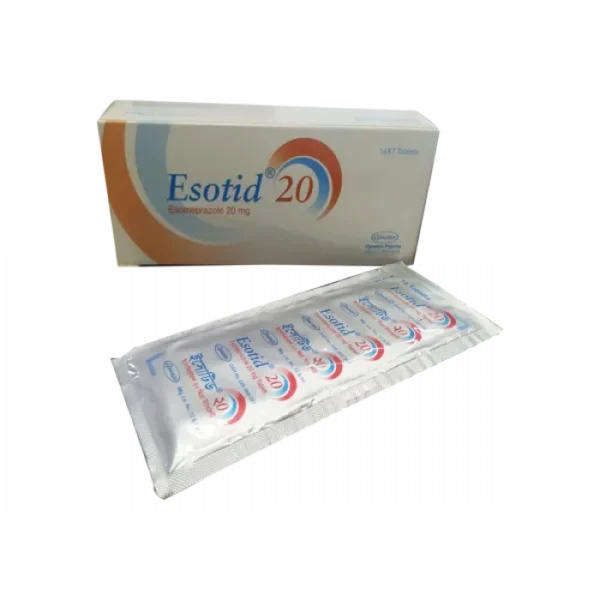
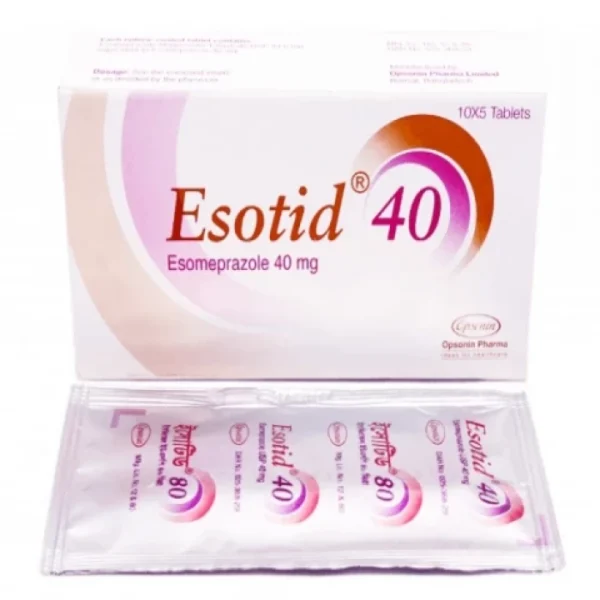
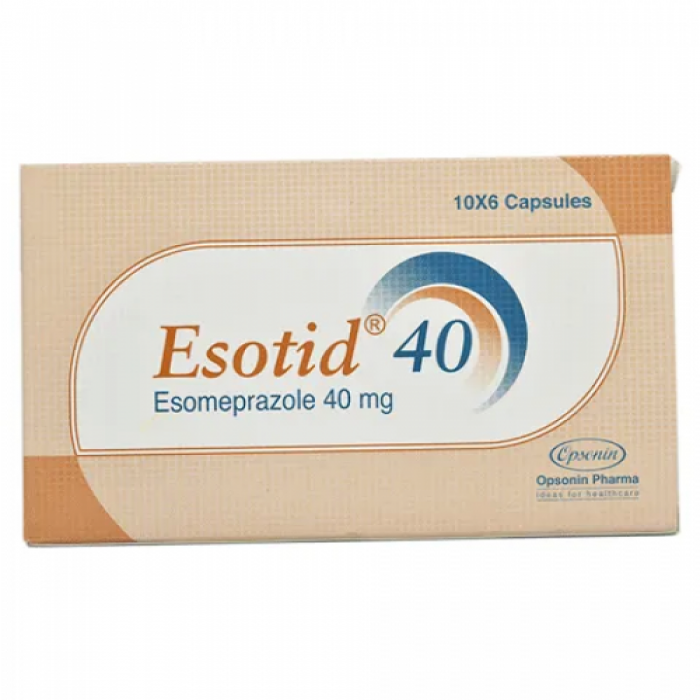
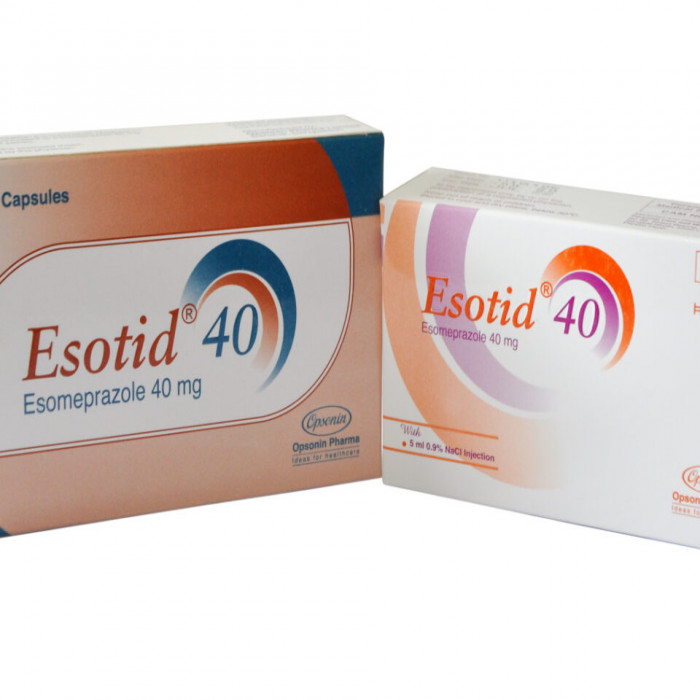
Manufacturer: Opsonin Pharma Limited
Generic: Esomeprazole 40 mg
Type: Capsule
Pack Size: 10 Pcs

Hurry and get discounts on all Apple devices up to 20%
Sale_coupon_15
100.00৳ Original price was: 100.00৳ .95.00৳ Current price is: 95.00৳ .
Generic Name: Esomeprazole 40mg
Manufacturer/Distributor: Opsonin Pharma Limited
Indication
Esotid 40 is a medication that lowers the amount of acid produced in the stomach. It is used to treat heartburn, acid reflux, and food pipe issues. It is also employed in the prevention and treatment of stomach ulcers. You should take Esotid 20 exactly as prescribed by your doctor.
Pharmacology
Esomeprazole is a proton pump inhibitor that reduces stomach acid production by specifically inhibiting the H+/K+-ATPase in the gastric parietal cell. Esomeprazole (S-isomer of omeprazole) is the first proton pump inhibitor with a single optical isomer that outperforms racemic proton pump inhibitors in acid control.
For absorption, esomeprazole capsules contain an enteric-coated pellet formulation of esomeprazole magnesium. Peak plasma levels (Cmax) occur approximately 1.5 hours after oral administration (Tmax). When the dose is increased, the Cmax rises proportionally, and the area under the plasma concentration-time curve (AUC) rises three times from 20 to 40 mg. With repeated once-daily administration, systemic bioavailability is around 90%, compared to 64% with a single dose. In comparison to fasting conditions, the AUC after a single dose of esomeprazole is reduced by 33-53 percent after food ingestion. Esomeprazole should be taken at least one hour before meals. In 97 percent of cases, esomeprazole is linked to plasma proteins. Plasma protein binding is constant over a concentration range of 2 20 mmol/L. At a steady state, the apparent volume of distribution in healthy individuals is around 16 L. In the liver, the cytochrome P450 (CYP) enzyme system extensively metabolizes esomeprazole. Metabolites of esomeprazole have no anti-secretory activity. The majority of esomeprazole metabolism is carried out by the CYP2C19 isoenzyme, which generates the hydroxy and desmethyl metabolites. The rest is reliant on CYP3A4, which generates the sulphone metabolite. The plasma elimination half-life of esomeprazole is approximately 1-1.5 hours. Less than 1% of the parent medication is eliminated in the urine. Approximately 80% of an oral dose of esomeprazole is eliminated as inactive metabolites in the urine, with the remainder detected as inactive metabolites in the feces.
Dosage
Administration
Esomeprazole tablet or capsule should be swallowed whole and taken one hour before a meal. Do not chew, crush or break it.
Interaction
Digoxin-induced cardiotoxicity is more likely. Diuretics increase the risk of hypomagnesemia. Warfarin may cause an increase in INR and prothrombin time. Tacrolimus, saquinavir, and methotrexate serum concentrations may be increased. Drugs metabolized by CYP2C19 may be eliminated more slowly (e.g. diazepam). Ketoconazole, erlotinib, and Fe salts’ bioavailability may be reduced. Possibly fatal: Rilpivirine, atazanavir, and nelfinavir serum concentrations and pharmacological effects may be reduced. Clopidogrel’s antiplatelet effects may be reduced.
Contraindications
Esomeprazole is not recommended for patients who have a history of hypersensitivity to any component of the formulation or substituted Benzimidazoles.
Side Effects
The most common side effects associated with Esomeprazole include
There is no difference in the types of associated adverse events seen after maintenance treatment for up to 12 months vs short-term treatment.
Pregnancy & Lactation
In pregnant women, there are no appropriate and well-controlled trials. Teratogenic effects have not been discovered in animal investigations. Esomeprazole excretion in milk has not been examined. If the use of esomeprazole is deemed necessary, breastfeeding should be stopped.
Precautions & Warnings
In general, symptomatic response to esomeprazole treatment does not rule out stomach cancer.
According to the manufacturer’s instructions, esomeprazole pills should be taken at least one hour before meals. If a patient has difficulty swallowing capsules, place one spoonful of applesauce in an empty bowl, open the Esomeprazole capsules, and carefully pour the pellets within the capsule into the applesauce. The pellets should be mixed with the applesauce and consumed quickly. The applesauce should be cold and mushy enough that it can be eaten without chewing. It is not advised to consume or crush the pellets. The pellet/applesauce mixture should not be refrigerated for future use. Antacids may be used while taking esomeprazole.
Storage Conditions
Store in a dry location at a temperature not exceeding 30°C. Keep out of direct sunlight and dampness. Keep out of children’s reach.
Baby Mom
No account yet?
Create an Account