


-5%
 Baby Mom
 Diabetic Care
 Health Devices
 Medicines
 Personal Care
 Sexual Wellbeing
 Vital Wellness
 Vitamins Supplements
 Women Care
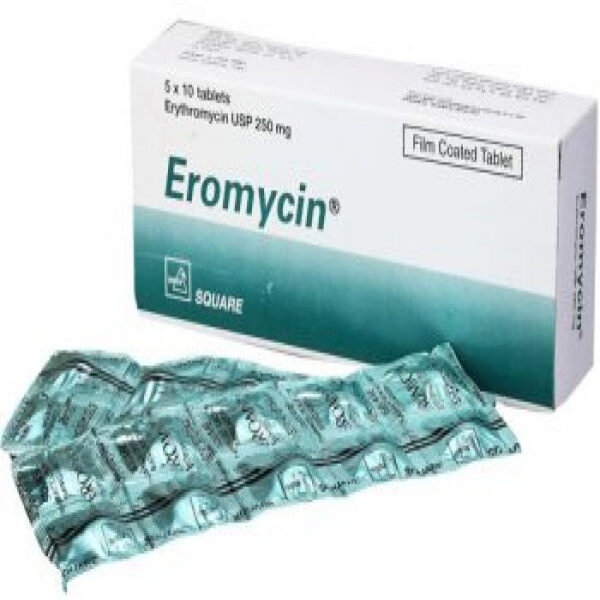
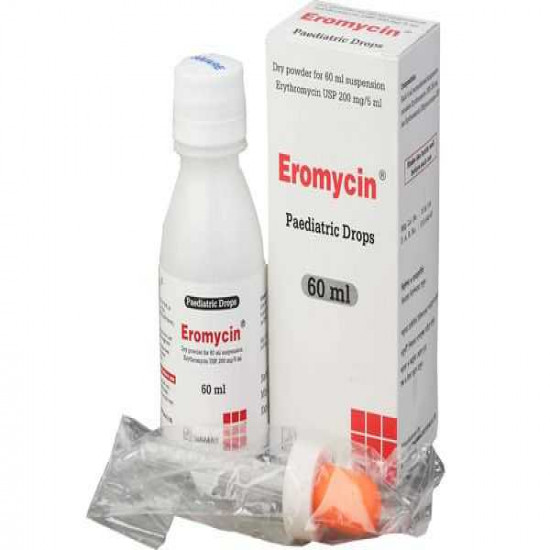
Manufacturer: Square Pharmaceuticals Ltd.
Generic: Erythromycin
Type: Tablet
Pack Size: 6 Pcs

Hurry and get discounts on all Apple devices up to 20%
Sale_coupon_15
62.10৳ Original price was: 62.10৳ .59.00৳ Current price is: 59.00৳ .
Erythromycin blocks the translocation process, which stops microsomal protein synthesis in sensitive organisms. These organisms have specific binding to the 50S subunit or the 70S ribosome, but no binding to the stable 80S mammalian ribosome. Erythromycin is effective against a wide range of Gram-positive and Gram-negative bacteria, as well as mycoplasmas and chlamydia. Because the base of erythromycin is destroyed by acid, it is given in the form of a stable ester. The presence of food reduces the rate of absorption of the base and esters. In the gut, the stearate is hydrolyzed, and the free erythromycin is absorbed. Peak serum concentrations of 0.9 to 1.4 or 0.4 to 1.8 mg/ml, respectively, are achieved in 1 to 4 hours after an oral dose of 500 mg of the base of stearate. The serum half-life ranges from 1.2 to 4 hours. The half-life in oliguric patients is roughly 5 hours.
Erythromycin is broadly dispersed throughout bodily tissue and fluids, with some retention in the liver and spleen. Erythromycin base has a 73 percent protein binding rate. When the meninges become inflamed, erythromycin enters the cerebrospinal fluid. It also passes through the placenta and is secreted in breast milk. The unmodified active ingredient is excreted in substantial amounts in the bile, and 5 to 15% of the erythromycin dose is eliminated in the urine.
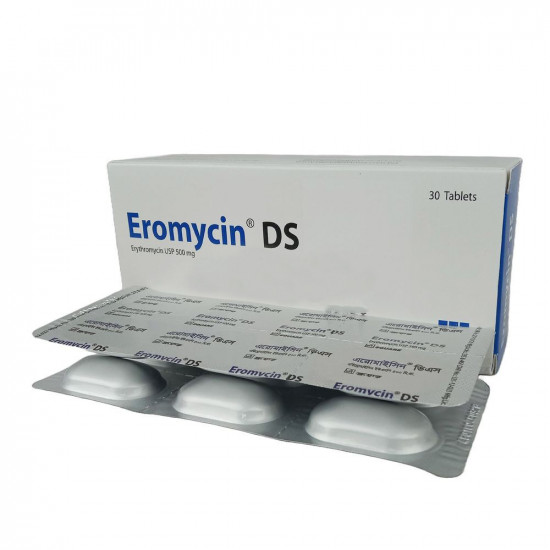
Eromycin DS is highly effective in the treatment of a wide variety of clinical infections, such as
Baby Mom
Diabetic Care
Health Devices
Medicines
Personal Care
Sexual Wellbeing
Vital Wellness
Vitamins Supplements
Women Care