


-2%
 Baby Mom
 Diabetic Care
 Health Devices
 Medicines
 Personal Care
 Sexual Wellbeing
 Vital Wellness
 Vitamins Supplements
 Women Care
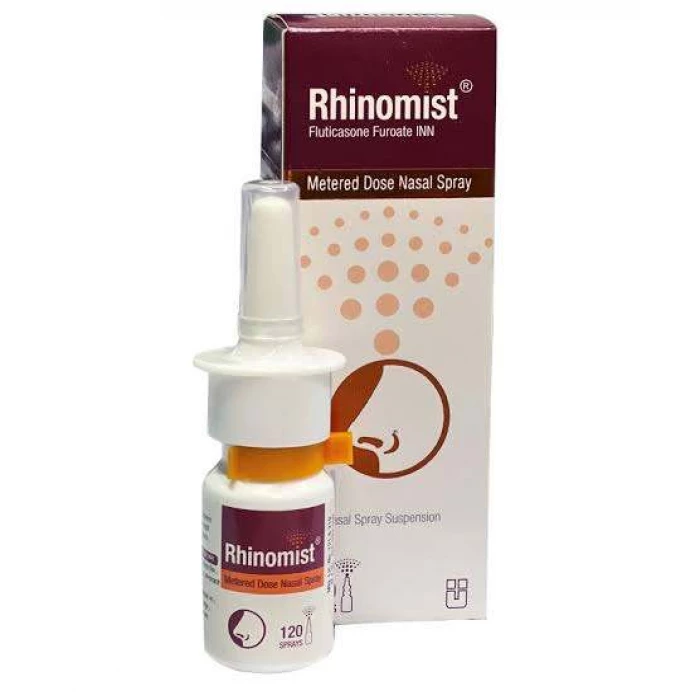
Manufacturer: Unimed & Unihealth Manufacturers Ltd.
Generic: Fluticasone Furoate
Type: Spray
Pack Size: 1 Pc

Hurry and get discounts on all Apple devices up to 20%
Sale_coupon_15
275.00৳ Original price was: 275.00৳ .269.50৳ Current price is: 269.50৳ .
Rhinomist Nasal Spray is primarily indicated for allergic rhinitis.
Rhinomist Nasal Spray is classified as a corticosteroid medication and is prescribed for managing nasal symptoms associated with seasonal and perennial allergic rhinitis, as well as non-allergic rhinitis in adults and children aged four years and older. Seasonal allergies are triggered by exposure to specific airborne substances, like pollens, occurring during certain seasons. Perennial allergies, on the other hand, are caused by year-round indoor exposure to pollutants like house dust. Non-allergic rhinitis, also known as vasomotor rhinitis, shares symptoms with allergic rhinitis but persists for more than nine months annually.
Containing fluticasone as its active ingredient, Rhinomist Nasal Spray works by inhibiting the release of certain inflammatory chemicals in the body. This mechanism provides relief from symptoms such as nasal congestion, runny nose, sneezing, itching, and watery eyes.
Rhinomist Nasal Spray is available only with a prescription and should be used exactly as directed by a healthcare professional or according to the instructions provided in the leaflet to achieve optimal benefits. Since minimal amounts of the medication are absorbed into the body, the likelihood of experiencing side effects with Rhinomist Nasal Spray is low. However, rare side effects may include headaches, nausea, vomiting, sore throat, nosebleeds, difficulty breathing, cough, burning, or itching. While most of these side effects typically resolve over time and do not necessitate medical intervention, it is advisable to consult a doctor if they persist or worsen.
Patients with a history of allergic reactions to fluticasone or other medications should inform their doctor before using Rhinomist Nasal Spray. Pregnant or nursing women should avoid its use without consulting a healthcare professional. Additionally, individuals with recent nasal ulcers, surgery, or trauma should refrain from using Rhinomist Nasal Spray. It is not recommended for children under four years old, but those aged four and above can use it under medical supervision. Regular eye examinations are advisable to monitor for conditions such as cataracts and glaucoma, which may develop with the use of fluticasone nasal sprays. Patients should inform their doctor about any history of fungal, bacterial, viral, or parasitic infections, as well as tuberculosis, before using Rhinomist Nasal Spray.
Baby Mom
Diabetic Care
Health Devices
Medicines
Personal Care
Sexual Wellbeing
Vital Wellness
Vitamins Supplements
Women Care