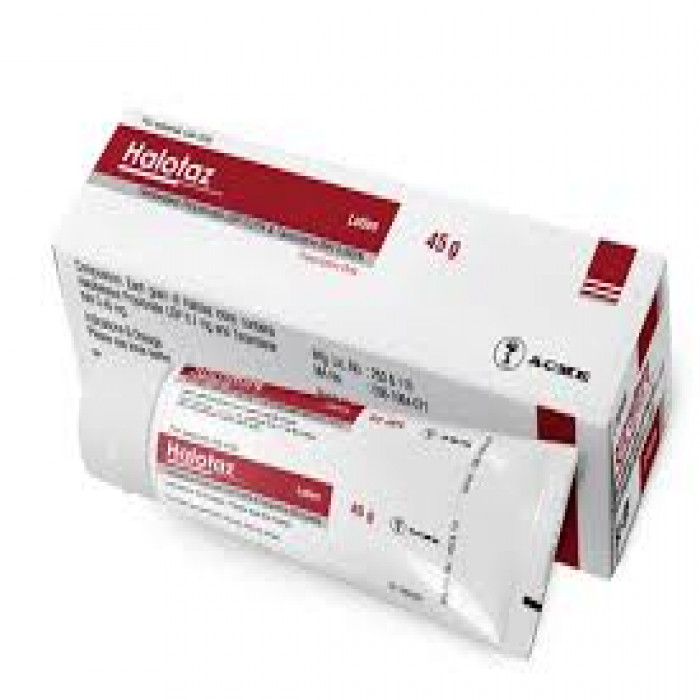
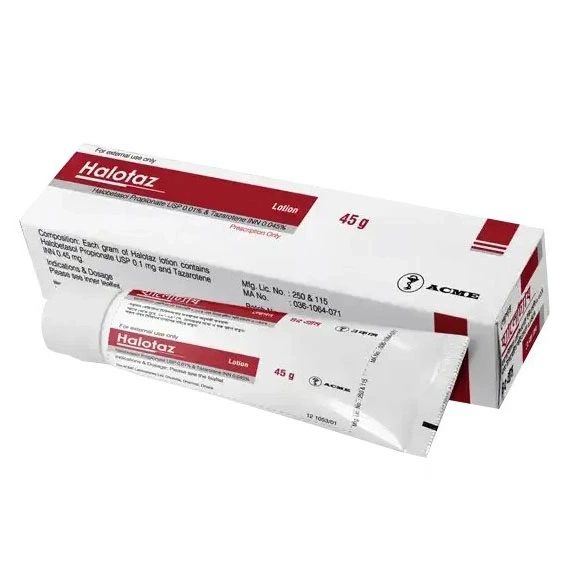
Halotaz Lotion is a combination of Halobetasol Propionate and Tazarotene used for treating plaque psoriasis in adults.
Psoriasis is a chronic autoimmune skin disease that causes red, itchy, and scaly patches. It occurs when the immune system erroneously targets healthy skin cells, leading to an accelerated growth of skin cells. These cells accumulate on the surface of the skin, forming thick, scaly rashes, commonly found on areas like the knees, elbows, scalp, and trunk.
Key Characteristics of Psoriasis:
Red, inflamed patches: These patches are often covered with silvery-white scales.
Itchy and painful rashes: The affected areas can cause discomfort, itching, or even cracking and bleeding.
Rapid skin cell turnover: Skin cells grow faster than normal, leading to scaly lesions.
Triggers:
Stress: Emotional stress can exacerbate the condition, causing flare-ups.
Cold weather: Winter months can worsen symptoms due to dry, cold air.
Infections: Certain infections may trigger or worsen psoriasis.
Injury to the skin: Physical trauma or injury can lead to new lesions forming.
Halotaz Lotion
Types of Psoriasis:
Plaque Psoriasis (the most common form): Causes raised, red patches with silvery scales.
Guttate Psoriasis: Characterized by small, dot-like lesions.
Inverse Psoriasis: Appears as red lesions in body folds.
Pustular Psoriasis: Involves white pustules surrounded by red skin.
Erythrodermic Psoriasis: A severe form leading to widespread redness and shedding of the skin.
Chronic Nature:
Psoriasis is a long-term disease with no permanent cure, though it can go through cycles of remission and flare-ups. Treatment aims to manage the symptoms, slow down skin cell growth, and prevent flare-ups.
Treatment:
Topical treatments: Creams and ointments like corticosteroids or retinoids.
Phototherapy: Exposure to ultraviolet light under medical supervision.
Systemic medications: Oral or injected medications for severe cases.
Biologic treatments: Target specific parts of the immune system.
Living with Psoriasis:
Although there is no cure, proper management and lifestyle adjustments, like stress management, moisturizing regularly, and avoiding triggers, can significantly help control the condition.