


-5%
 Baby Mom
 Diabetic Care
 Health Devices
 Medicines
 Personal Care
 Sexual Wellbeing
 Vital Wellness
 Vitamins Supplements
 Women Care
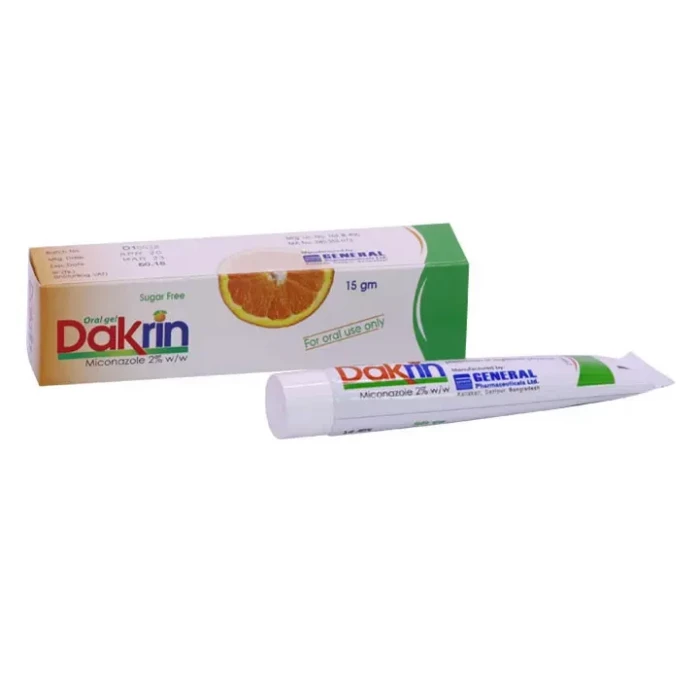
Manufacturer: General Pharmaceuticals Ltd.
Generic: Miconazole
Type: Gel
Pack Size: 15gm

Hurry and get discounts on all Apple devices up to 20%
Sale_coupon_15
62.00৳ Original price was: 62.00৳ .58.90৳ Current price is: 58.90৳ .
Dakrin 2% Oral Gelis indicated for:
Pharmacology:
Pharmacodynamics: Miconazole exhibits antifungal activity against common dermatophytes and yeasts, and antibacterial activity against certain gram-positive bacilli and cocci. It inhibits a demethylation step in ergosterol biosynthesis, disrupting the production of ergosterol, a key component of fungal cell membranes. This disruption causes holes in the fungal cell membrane, leading to leakage of essential cell constituents and ultimately cell death.
Pharmacokinetics: Miconazole’s oral bioavailability is low (25-30%) due to limited absorption from the intestinal tract. After administration as an oral gel, it is systemically absorbed. Absorbed miconazole binds to plasma proteins (88.2%), primarily serum albumin and red blood cells (10.6%). It is largely metabolized, with less than 1% excreted unchanged in the urine. The terminal plasma half-life is 20-25 hours, similar in patients with renal impairment.
Dosage:
Oropharyngeal candidosis:
Gastrointestinal tract candidosis:
Missed Dose: Apply the missed dose as soon as you remember. If it is almost time for the next dose, skip the missed dose and continue your regular schedule. Do not double the dose.
Administration:
For localized lesions of the mouth, apply a small amount of gel 2-4 times a day directly to the affected area with a clean finger. For best results, keep the gel in contact with the affected area as long as possible. Continue treatment for at least a week after symptoms have disappeared. For oral candidosis, remove dental prostheses at night and brush them with the gel.
Interaction:
Contraindications:
Side Effects:
Pregnancy & Lactation:
Precautions & Warnings:
Overdose Effects:
Storage Conditions:
Baby Mom
Diabetic Care
Health Devices
Medicines
Personal Care
Sexual Wellbeing
Vital Wellness
Vitamins Supplements
Women Care