


-5%
 Baby Mom
 Diabetic Care
 Health Devices
 Medicines
 Personal Care
 Sexual Wellbeing
 Vital Wellness
 Vitamins Supplements
 Women Care

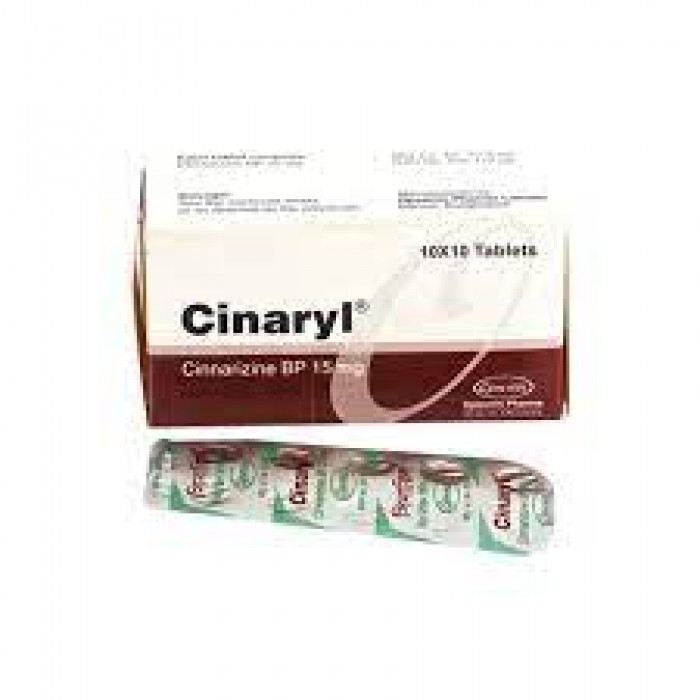
Manufacturer: Opsonin Pharma Limited
Generic: Cinnarizine 15mg
Type: Tablet
Pack Size: 10 Pcs

Hurry and get discounts on all Apple devices up to 20%
Sale_coupon_15
10.00৳ Original price was: 10.00৳ .9.50৳ Current price is: 9.50৳ .
Tablet Manufacturer/Distributor: Opsonin Pharma Limited Generic Name: Cinnarizine 15 mg Tablet
It is primarily used to treat the symptoms of nausea and vertigo caused by Meniere’s disease and other labyrinthine abnormalities, as well as to prevent and treat motion sickness. It is also used to treat a variety of vascular diseases.
Circulatory problems in the brain:
Symptoms of vascular spasms and arteriosclerosis (obliterating arteritis, thromboangitis obliterans, Raynaud’s disease, diabetes, acrocyanosis, perrio, etc.) such as intermittent claudication, trophic disturbances, pregangrene, trophic and varicose ulcers, paraesthesia, nocturnal cramps, cold extremities are treated with prophylaxi
Balance problems include:
Cinnarizine has antihistamine, labyrinthine sedative, and peripheral antivasoconstrictor properties. Cinnarizine is a calcium antagonist that inhibits the intracellular inflow of Ca2+. It inhibits Ca2+ influx through smooth muscle calcium channels, preventing Ca2+ dependent contraction of arterial smooth muscle and therefore improving vestibular symptoms and preventing peripheral arterial disease.
Usual adult dose: 15 to 30 mg three times daily.
Children (5 to 12 years): Half of the adult dose.
Motion sickness: A dose of 30 mg two hours before the start of the journey and 15 mg every 8 hours during the journey.
Peripheral arterial diseases: 75 mg two or three times daily.
Cinnarizine has not been found to interact with antihypertensives, diuretics, anticoagulants, or hypoglycaemics when taken together.
There are no known contraindications to using this product. It has been discovered to dramatically lower blood pressure. In hypotensive individuals, however, the medication should be taken with care.
Side effects such as drowsiness and gastrointestinal problems are exceedingly uncommon. They are transitory and may be easily avoided by progressively attaining the appropriate dose. Rarely, allergic skin reactions and tiredness have been recorded. Extrapyramidal symptoms may worsen or develop in older persons who are on long-term treatment. In such instances, the therapy should be decreased or discontinued.
Although no teratogenic effects have been revealed in animal research, the safety of Cinnarizine in human pregnancy has not been confirmed. As a result, it is not recommended to use Cinnarizine during pregnancy.
Cinnarizine can make you drowsy, so don’t drive or operate machinery if you’re impacted. Avoid consuming alcoholic beverages.
Anti vertigo drugs
Keep the temperature below 30°C and away from light and moisture. Keep out of children’s reach.
Baby Mom
Diabetic Care
Health Devices
Medicines
Personal Care
Sexual Wellbeing
Vital Wellness
Vitamins Supplements
Women Care