


-5%

 Baby Mom
 Diabetic Care
 Health Devices
 Medicines
 Personal Care
 Sexual Wellbeing
 Vital Wellness
 Vitamins Supplements
 Women Care
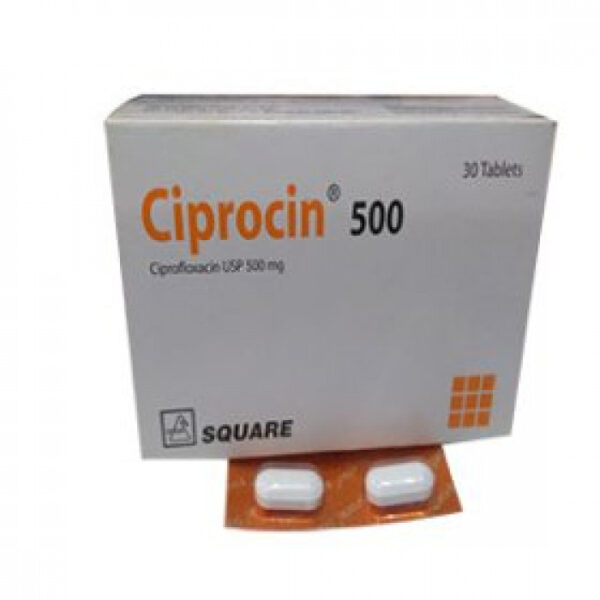
Manufacturer: Square Pharmaceuticals Ltd.
Generic: Ciprofloxacin 250 mg
Type: Tablet
Pack Size: 10 Pcs

Hurry and get discounts on all Apple devices up to 20%
Sale_coupon_15
85.60৳ Original price was: 85.60৳ .81.32৳ Current price is: 81.32৳ .
Generic Name: Ciprofloxacin 250mg
Manufacturer/Distributor: Square Pharmaceuticals Ltd.
Indications of Ciprocin 250 Tablet
Ciprofloxacin is used to treat Respiratory Tract Infections, Urinary Tract Infections, Pelvic Inflammatory Diseases, Infectious Diarrhea (Shigella dysenteriae, Vibrio cholera), Typhoid Fever, Intra-abdominal Infections, Prostatitis, Skin, and Soft Tissue Infections, Bone and Joint Infections, Gonorrhea, Neutropenic Patients
Pharmacology of Ciprocin 250 Tablet
Ciprofloxacin is a fluoroquinolone antibiotic that is synthesized. It exhibits bactericidal action against both gram-positive and gram-negative bacteria. By binding to the bacterial enzymes DNA gyrase and topoisomerase IV, which are responsible for DNA supercoiling, it inhibits bacterial DNA synthesis.
Dosage of Ciprocin 250 Tablet
Adult: Tablet:
Infections of the respiratory tract: 500 to 750 mg twice daily (7 to 14 days)
Infections of the urinary tract: 250 to 750 mg twice daily (3 to 10 days)
500 to 750 mg twice daily for Pelvic Inflammatory Diseases (14 days)
500 mg twice daily for infectious diarrhea (Shigella dysenteriae, Vibrio cholera) (1 to 5 days)
500 mg twice daily for typhoid fever (7 days)
500 to 750 mg twice daily for intra-abdominal infections (5 to 14 days)
500 to 750 mg twice daily for prostatitis (2 to 6 weeks)
Infections of the skin and soft tissues: 500 to 750 mg twice daily (7 to 14 days)
Infections of the bones and joints: 500 to 750 mg twice daily (max. 3 months)
500 mg as a single dosage for gonorrhea
500 to 750 mg twice daily, co-administered with suitable antibacterials in neutropenic patients with fever owing to bacterial illness.
500 mg as a single dosage for meningitis.
Surgical prophylaxis: 500 mg in one dosage, 60 minutes before surgery.
Suspension: 10-20 mg/kg (maximum 750 mg) twice daily in children (10 to 21 days). The length of treatment is determined by the kind and severity of the illness.
Extended-release tablet: The recommended dose of the extended-release tablet for uncomplicated urinary tract infection (acute cystitis) is 1000 mg tablet once a day for three days.
For IV infusion:
Urinary Tract Infection: Mild to Moderate: 200 mg 12 hourly for 7-14 days; Severe or Complicated: 400 mg 12 hourly for 7-14 days
Lower Respiratory Tract Infection: Mild to Moderate: 400 mg 12 hourly for 7-14 days; Severe or Complicated: 400 mg 8 hourly for 7-14 days
Nosocomial Pneumonia: Mild/Moderate/Severe: 400 mg 8 hourly for 10-14 days
Skin and Skin Structure: Mild to Moderate: 400 mg 12 hourly for 7-14 days; Severe or Complicated: 400 mg 8 hourly for 7-14 days
Bone and Joint Infection: Mild to Moderate: 400 mg 12 hourly for more than 4-6 weeks; Severe/Complicated: 400 mg 8 hourly for more than 4-6weeks
Intraabdominal (Acute abdomen): Complicated: 400 mg 12 hourly for 7-14 days
Acute Sinusitis: Mild/Moderate: 400 mg 12 hourly for 10 days
Chronic Bacterial Prostatitis: Mild/Moderate: 400 mg 12 hourly for 28 Days.
Administration of Ciprocin 250 Tablet
Instruction for the use of Ciprofloxacin IV infusion:
Check the bag for minute leaks by squeezing the inner bag firmly. If leaks are found, or if the seal is not intact, discard the solution.
Do not use it if the solution is cloudy or a precipitate is present.
Do not use flexible bags in series connections.
Close flow control clamp of administration set.
Remove the cover from the port at bottom of the bag.
Insert the piercing pin of administration set into the port with a twisting motion until the pin is firmly seated.
Suspend the bag from the hanger.
Squeeze and release the drip chamber to establish proper fluid level in the chamber during infusion of Ciprofloxacin IV infusion.
Open the flow control clamp to expel air from the set. Close clamp.
Regulate rate of administration with flow control clamp.
The length of treatment is determined by the severity of the illness, clinical response, and bacteriological results. The typical treatment time for acute infections is 5 to 10 days. After the infection’s signs and symptoms have faded, therapy should usually be continued for another three days.
Interaction of Ciprocin 250 Tablet
Ciprofloxacin should not be taken at the same time as magnesium or aluminum-containing antacids, sucralfate, or any calcium, iron, or zinc-containing medications. Ciprofloxacin can be administered two hours after or six hours before these products. Ciprofloxacin should not be used with milk or other dairy products because the absorption of Ciprofloxacin may be decreased considerably. However, dietary calcium, when consumed as part of a meal, has no effect on Ciprofloxacin absorption.
Contraindications
Patients who have a known hypersensitivity to Ciprofloxacin or other quinolones should avoid it.
Side Effects of Ciprocin 250 Tablet
Nausea and other gastrointestinal problems, headache, dizziness, joint pain, and skin rashes are all possible side effects.
Pregnancy & Lactation
In pregnant women, there are no appropriate and well-controlled trials. Only if the possible benefit outweighs the danger to the fetus and mother should Ciprofloxacin be taken during pregnancy. Human milk contains ciprofloxacin, which is excreted. Ciprofloxacin should not be taken during breastfeeding due to the risk of articular injury.
Precautions & Warnings
Patients using Ciprofloxacin should be encouraged to drink plenty of water. In individuals with suspected or established CNS diseases, such as epilepsy, or other conditions that predispose them to seizures and convulsions, it should be taken with care. Hypokalemia should be avoided in patients with known QT prolongation.
Storage Conditions
Keep the temperature below 30°C and keep it away from light and moisture. Keep out of children’s reach.
Baby Mom
Diabetic Care
Health Devices
Medicines
Personal Care
Sexual Wellbeing
Vital Wellness
Vitamins Supplements
Women Care