


-2%
 Baby Mom
 Diabetic Care
 Health Devices
 Medicines
 Personal Care
 Sexual Wellbeing
 Vital Wellness
 Vitamins Supplements
 Women Care
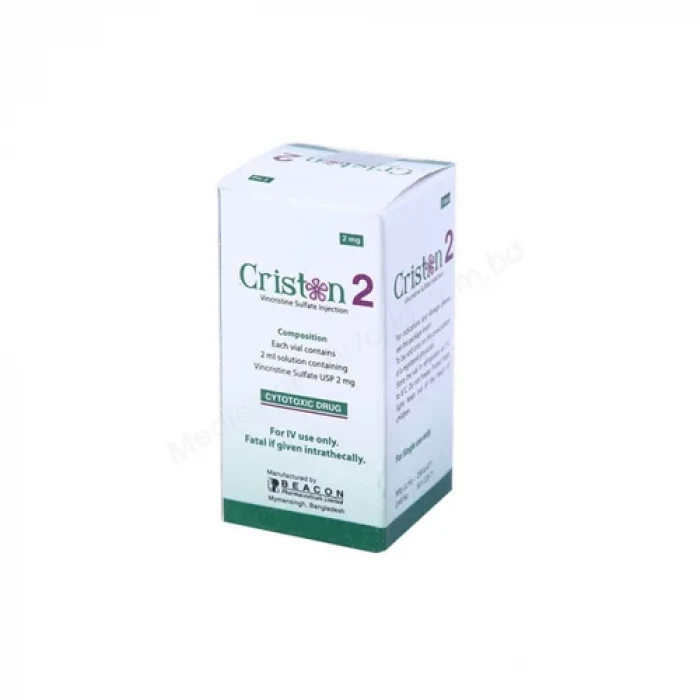
Manufacturer: Beacon Pharmaceuticals Ltd.
Generic: Others
Type: Injection
Pack Size: 1 Pc

Hurry and get discounts on all Apple devices up to 20%
Sale_coupon_15
580.00৳ Original price was: 580.00৳ .568.40৳ Current price is: 568.40৳ .
Criston is used for the treatment of acute leukemia. It has also been proven effective when combined with other anticancer drugs for treating Hodgkin’s disease, non-Hodgkin’s malignant lymphomas (including lymphocytic, mixed-cell, histiocytic, undifferentiated, nodular, and diffuse types), rhabdomyosarcoma, neuroblastoma, and Wilms’ tumor.
Vincristine sulfate is an anti-cancer medication used to treat various types of cancer, including those affecting the breast, pancreas, kidneys, blood, bones, and lungs. Cancer involves genetic changes that cause cells to divide uncontrollably and spread to surrounding tissues. There are over 100 types of cancer, such as blood cancer, lung cancer, and breast cancer.
The active ingredient in Vincristine sulfate 2mg Injection is vincristine, which works by inhibiting DNA replication in cancer cells. This prevents the growth and multiplication of cancer cells.
Take Vincristine sulfate Injection exactly as prescribed by your doctor. The duration of treatment will depend on your specific medical condition and your doctor’s recommendations. Some common side effects include hair loss, constipation, headache, peripheral neuropathy (tingling or numbness in hands and feet), stomach cramps, fatigue, pain in the back, bones, joints, or muscles, mouth irritation, and sores. These side effects usually resolve over time without the need for medical intervention. However, consult your doctor if these side effects persist.
Do not use Vincristine sulfate Injection if you are allergic to vincristine or any of its components. Vincristine sulfate 2mg Injection is classified as a pregnancy category D drug and should not be used by pregnant women or those planning to become pregnant, as it may cause serious birth defects. Both men and women should use effective contraception to prevent pregnancy while undergoing treatment.
Avoid alcohol consumption during treatment, as it may increase dizziness. Vincristine sulfate can also make you more prone to infections. If you notice any signs of infection, such as fever, sore throat, shortness of breath, jaundice, unexplained bleeding, or bruising, consult your doctor immediately. Your doctor may recommend regular blood, kidney, and liver tests to monitor your condition.
Baby Mom
Diabetic Care
Health Devices
Medicines
Personal Care
Sexual Wellbeing
Vital Wellness
Vitamins Supplements
Women Care