





-5%
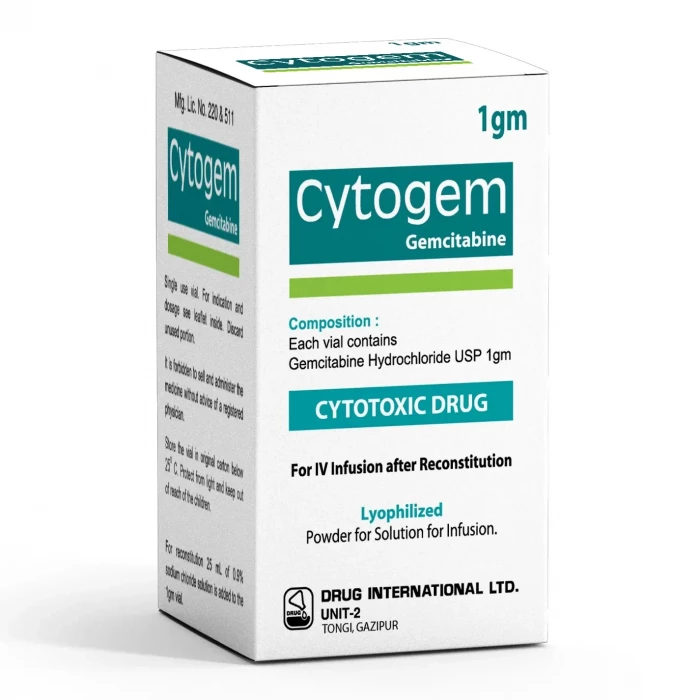

Gemcitabine (dFdC) is metabolized inside cells to its active forms, diphosphate (dFdCDP) and triphosphate (dFdCTP) nucleosides. Its mechanism involves:
Small amounts may also integrate into RNA. Gemcitabine’s incorporation into DNA causes the termination of chain growth after one additional nucleotide.
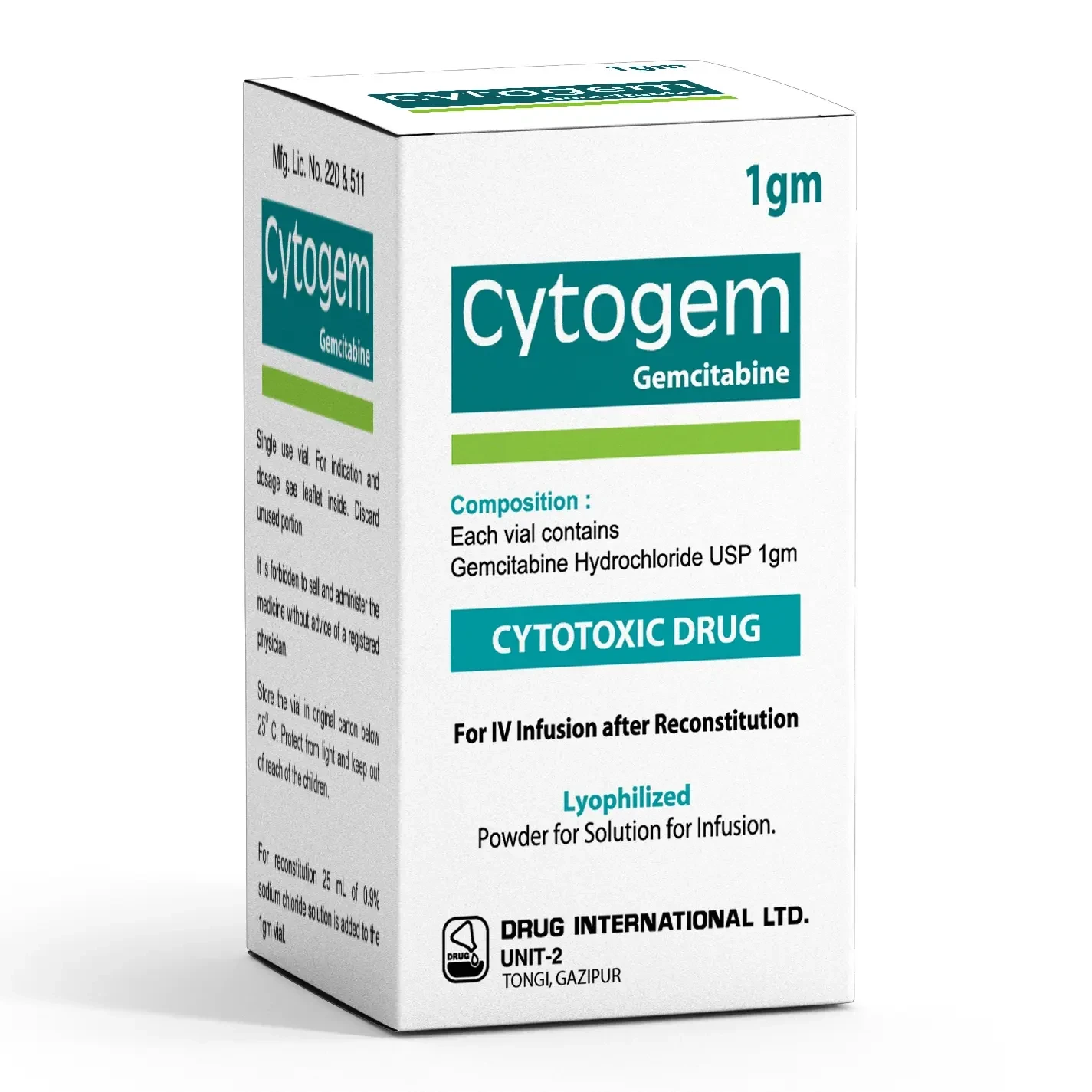
Non-Small Cell Lung Cancer (NSCLC):
- First-line therapy: Cytogem, combined with Cisplatin, is used for patients with locally advanced (inoperable Stage IIIA or IIIB) or metastatic (Stage IV) NSCLC.
- Palliative treatment: Suitable for adult patients with locally advanced or metastatic NSCLC.
Pancreatic Cancer:
- Treats adult patients with locally advanced or metastatic adenocarcinoma of the pancreas.
- Indicated for patients with pancreatic cancer refractory to 5-FU therapy.
Bladder Cancer:
- Treats advanced bladder cancer (muscle-invasive Stage IV tumors with or without metastases) in combination with Cisplatin.
Breast Cancer:
- Used with Paclitaxel to treat metastatic breast cancer in patients who relapsed after adjuvant or neoadjuvant chemotherapy. Previous treatment should include anthracyclines unless contraindicated.
Ovarian Cancer:
- In combination with Carboplatin, treats recurrent epithelial ovarian carcinoma in patients relapsing after platinum-based therapy.
(Use only as advised by a registered physician.)