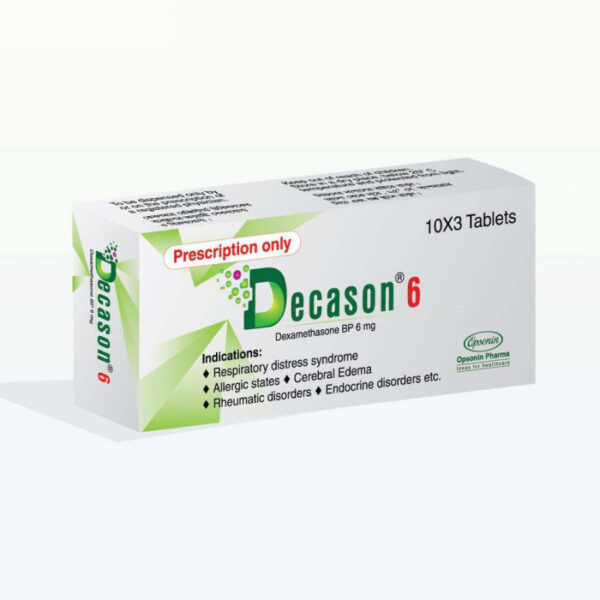
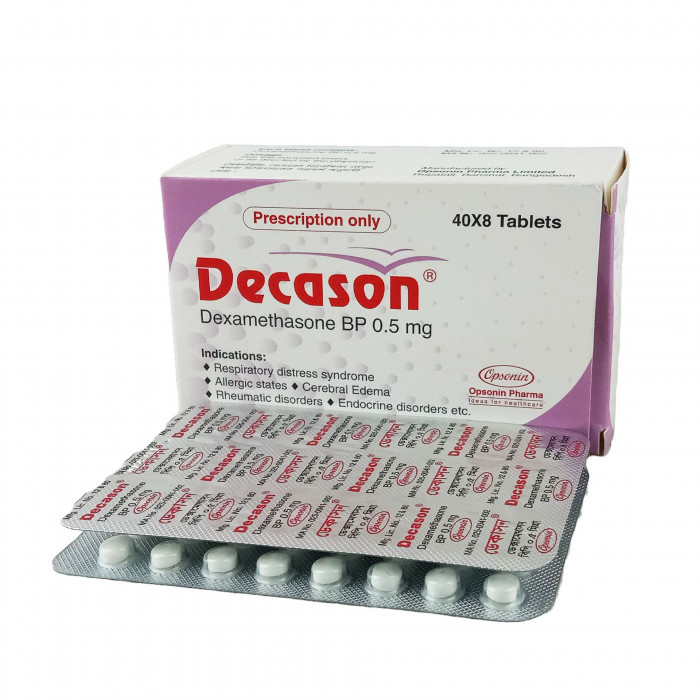
Dexamethasone suppresses inflammation by preventing leukocyte migration and reversing increased capillary permeability. It also suppresses immune system activity.
Dexamethasone is a synthetic glucocorticoid used in the management of severe allergic conditions, inflammatory disorders, and various other medical conditions, including:
- Allergic Conditions: Severe cases of asthma, atopic/contact dermatitis, drug hypersensitivity, rhinitis, and serum sickness unresponsive to conventional treatments.
- Collagen Disorders: Lupus erythematosus, rheumatoid arthritis, and related conditions.
- Dermatologic Diseases: Severe forms of erythema multiforme (Stevens-Johnson syndrome), pemphigus, mycosis fungoides, bullous dermatitis herpetiformis, and exfoliative erythroderma.
- Endocrine Disorders: Primary/secondary adrenocortical insufficiency, congenital adrenal hyperplasia, hypercalcemia linked to cancer, and nonsuppurative thyroiditis.
- Gastrointestinal Diseases: Ulcerative colitis and regional enteritis.
- Hematologic Disorders: Conditions like idiopathic thrombocytopenic purpura in adults, autoimmune hemolytic anemia, and Diamond-Blackfan anemia.
- Neoplastic Diseases: Treatment of leukemias and lymphomas.
- Neurological Disorders: Used in acute multiple sclerosis exacerbations, cerebral edema related to tumors, head injury, or craniotomy.
- Ophthalmic Diseases: Uveitis, temporal arteritis, and inflammatory eye conditions resistant to topical corticosteroids.
- Renal Disorders: Management of idiopathic nephrotic syndrome and lupus-induced proteinuria.
- Respiratory Diseases: Treatment of sarcoidosis, pulmonary tuberculosis (alongside antituberculous drugs), eosinophilic pneumonia, and berylliosis.
- Rheumatic Disorders: Short-term therapy in psoriatic arthritis, ankylosing spondylitis, acute rheumatic carditis, and rheumatoid arthritis (including juvenile forms). Also used for dermatomyositis, polymyositis, and systemic lupus erythematosus.
- Miscellaneous Uses: Tuberculous meningitis, trichinosis with neurological or cardiac involvement, and adrenal function testing.
Mechanism of Action
Injection (IV, IM, or Local Use):
- Emergency IV therapy (e.g., anaphylaxis, severe asthma, cerebral edema): Initial dose of 10–20 mg IV, followed by 6 mg IV or IM every 6 hours until stabilized.
- Intra-articular: 2–4 mg for large joints, 0.8–1 mg for small joints.
- Intrabursal: 2–4 mg; in tendon sheaths: 0.4–1 mg.
- Dilution with Infusion Fluids: Can be diluted with solutions such as 0.9% Sodium Chloride, 5% Glucose, or Ringer’s solution and remains stable for at least 24 hours.



 Baby Mom
 Diabetic Care
 Health Devices
 Medicines
 Personal Care
 Sexual Wellbeing
 Vital Wellness
 Vitamins Supplements
 Women Care