


-5%
 Baby Mom
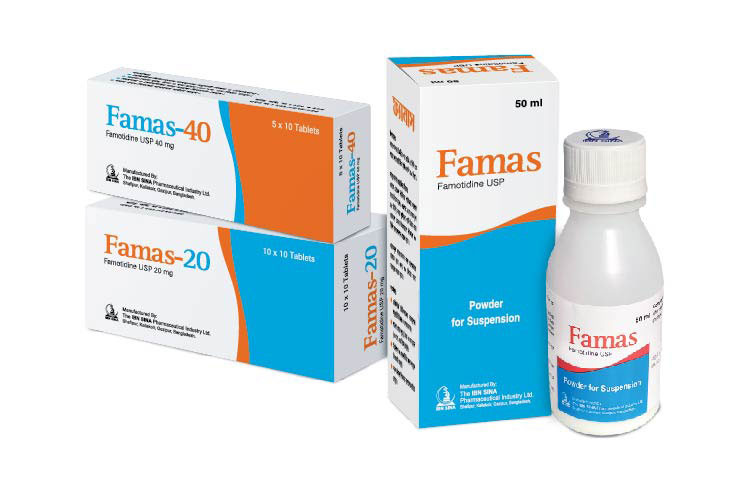
Manufacturer: Ibne Sina Pharmaceuticals
Generic: Famotidine
Type: Tablet
Pack Size: 10 Pcs

Hurry and get discounts on all Apple devices up to 20%
Sale_coupon_15
40.00৳ Original price was: 40.00৳ .38.00৳ Current price is: 38.00৳ .
Famotidine is a histamine H2-receptor antagonist. Famotidine completely inhibits the action of histamine on H2- receptors of parietal cells. It inhibits basal, overnight, and pentagastrin-stimulated gastric acid secretion. The H2- receptor antagonist activity of Famotidine is slowly reversible, since the drug dissociates slowly from the H2-receptor
Famas is indicated in-
Famas is also indicated for the treatment of acute gastritis and chronic gastritis in the acute exacerbation stage.
Tablet:
No clinically important drug interactions have been identified. Famas does not interact with the cytochrome P450-linked drug-metabolizing enzyme system.
Pregnancy category B. There are no adequate and well-controlled studies in pregnant women. This drug should be used during pregnancy only if clearly needed. Caution should be exercised when Famotid is administered to a nursing woman.
Keep below 30°C temperature, away from light & moisture. Keep out of the reach of children.
Baby Mom
No account yet?
Create an Account