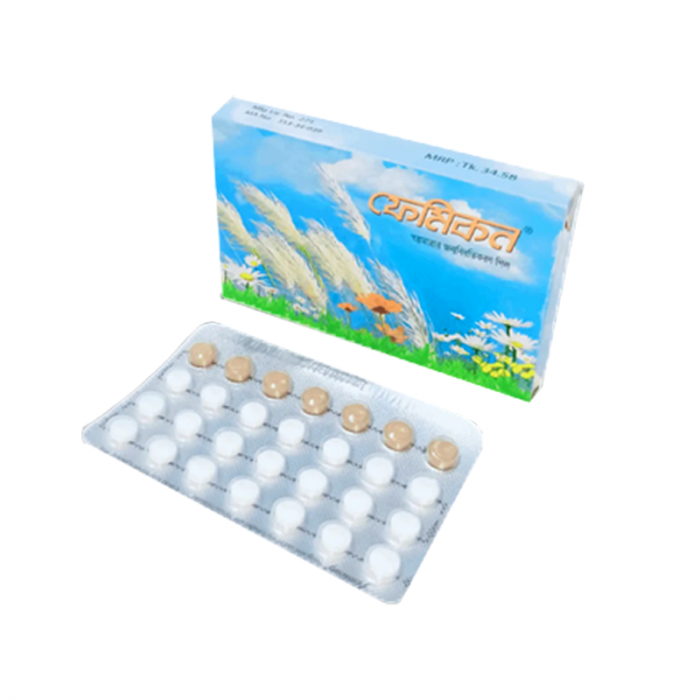
Femicon is a combined oral contraceptive (COC) designed to prevent pregnancy. It contains the hormones norgestrel, ethinylestradiol, and ferrous fumarate as an iron supplement during the inert phase. One active white tablet daily for 21 consecutive days, followed by one brown tablet daily for 7 consecutive days. Tablets should be taken at the same time each day to maintain efficacy, and no more than 24 hours apart.
Each package includes:
21 active tablets: Each containing 0.3 mg of norgestrel and 0.03 mg of ethinylestradiol.
7 brown inert tablets: Each containing 75 mg of ferrous fumarate.
Femicon includes:
Levonorgestrel and Ethinylestradiol: Hormones that prevent ovulation, hinder sperm entry into the uterus, and keep the uterus lining thin, making it less favorable for egg implantation.
Ferrous fumarate: An iron supplement that helps offset the iron loss during menstruation.
This combination medication is used primarily for contraception (birth control) and for managing dysmenorrhea, which includes symptoms like irregular, painful periods, abdominal pain, digestive issues, fainting, vomiting, and nausea. Femicon is a contraceptive that offers pregnancy prevention and family planning support.
Common side effects may include: Edema, weakness, menstrual irregularities (e.g., breakthrough bleeding, amenorrhea), mood changes, dizziness, headache, breast tenderness, nausea, vomiting, weight changes, and cholestatic jaundice.
Take this medication exactly as prescribed by your doctor.
Typically taken daily, following a set schedule for maximum efficacy.
Avoid if allergic to any ingredients.
Smoking while taking this medication increases the risk of blood clots.
Inform your doctor if you are over 35, have a history of heart issues, uncontrolled hypertension, cancers (breast, uterine, or vaginal), liver disease, diabetes affecting blood vessels, neurological headaches, or if you are immobilized due to surgery.
Avoid this medication if you are pregnant or breastfeeding.
Smoking, especially for those over 35, heightens risks.
Regular monitoring is recommended for patients with a history of blood vessel-related diabetes, liver disease, or cancer.