


-5%
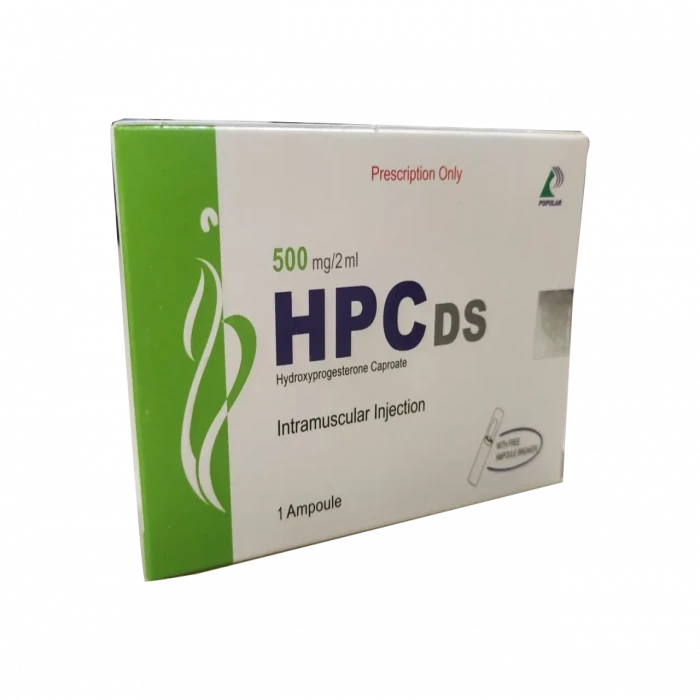
 Baby Mom
Manufacturer: Popular Pharmaceuticals Ltd.
Type: Injection
Pack Size: 1 Pc

Hurry and get discounts on all Apple devices up to 20%
Sale_coupon_15
750.00৳ Original price was: 750.00৳ .712.50৳ Current price is: 712.50৳ .
Generic Name: Hydroxyprogesterone Caproate 500mg/ 2ml
Company Name: Popular Pharmaceuticals Ltd.
Indications
Pregnant women who use HPC DS Injection are less likely to deliver their babies too soon by reducing the risk of premature labor (preterm birth). In women who have already experienced one premature birth, it lowers the risk of premature birth and prevents miscarriage. Only doctors or those working under their supervision may administer HPC DS Injections. You should consider it to be medical advice. Your doctor will determine how much medication you require and for how long. As long as it has been prescribed for you, you should administer this injection.
Pharmacology
The mechanism by which progesterone prevents preterm delivery is unknown, despite the fact that many potential pathways are involved. Progesterone regulates the female reproductive system and is crucial for successful embryo implantation and pregnancy maintenance. It binds to progesterone receptors in numerous organs, including the uterus, ovaries, breasts, and central nervous system, to accomplish this. Neither PR-A nor PR-B has a single isoform. Progesterone, which these receptors bind, controls the transcription of genes.
Dosage & Administration
A progestin is HPC DS Injection (female hormone). It functions by regulating the mother’s immune response to stop the embryo from being rejected and to enable its attachment to the uterus. In women who have already experienced one premature birth, this helps reduce the risk of miscarriage and lowers the likelihood of premature birth.
Administer 500 mg or 250 mg intramuscularly once a week. Start the course of treatment between 16 weeks and 20 weeks and 6 days after conception. Maintain weekly administration until week 37 (36 weeks, 6 days through delivery), whichever comes first.
Administration-
Contraindications
Side Effects
Inform your doctor immediately if you have pain in the chest, groin, or legs, difficulty with breathing, sudden severe headache, slurred speech, sudden unexplained shortness of breath, a sudden loss of coordination, or vision changes while using this medicine.
Pregnancy & Lactation
Pregnancy is classified as Category B. There are no sufficient and well-controlled trials in pregnant women during the first trimester. In a trial of pregnant women receiving the medicine during their second and third trimesters, as well as a follow-up safety analysis of their infants, teratogenic risks to infants following in-utero exposure to the drug were not demonstrated. It is not meant to interrupt active premature labor; the drug’s impact in this situation is uncertain.
Lactation: Progestins were found in detectable concentrations in the breast milk of women using progestins. Progestins have no negative effects on breastfeeding performance, infant health, growth, or development. At 37 weeks of pregnancy or when the baby is born, stop taking the medicine.
Precautions & Warnings
Storage Conditions
Store between 15°C and 30°C at a controlled room temperature. Protects against the light. Keep out of children’s reach.
Baby Mom
No account yet?
Create an Account