


-2%
 Baby Mom
 Diabetic Care
 Health Devices
 Medicines
 Personal Care
 Sexual Wellbeing
 Vital Wellness
 Vitamins Supplements
 Women Care

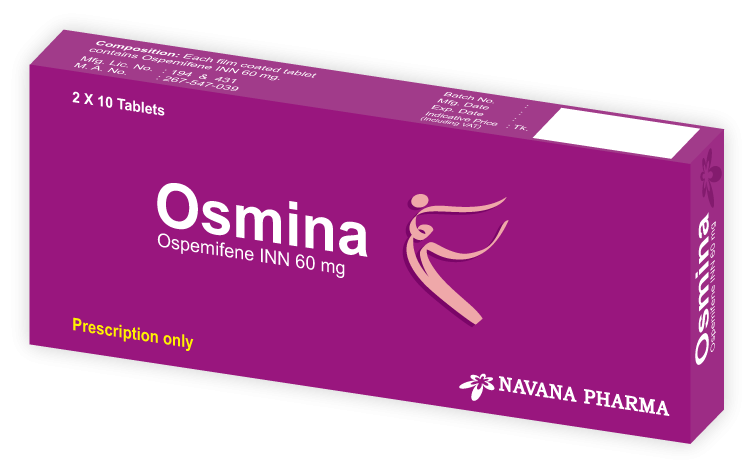
Manufacturer: Navana Pharmacuticals Ltd.
Generic: Ospemifene
Type: Tablet
Pack Size: 10 Pcs

Hurry and get discounts on all Apple devices up to 20%
Sale_coupon_15
300.00৳ Original price was: 300.00৳ .294.00৳ Current price is: 294.00৳ .
Ospemifene is a selective estrogen receptor modulator (SERM). It binds selectively to estrogen receptors and can either mimic or block estrogen effects depending on the body tissue. It produces estrogen-like activity in the endometrium
Osmina is an estrogen receptor agonist/antagonist used to treat moderate to severe pain during sexual intercourse (dyspareunia) associated with vulvar and vaginal atrophy caused by menopause. It may also be used to relieve moderate to severe vaginal dryness related to menopause.
For moderate to severe dyspareunia or vaginal dryness associated with menopausal vulvovaginal atrophy, the recommended dose is 60 mg once daily with food, or as prescribed by the physician.
Osmina is mainly metabolized by CYP3A4 and CYP2C9, with CYP2C19 and other metabolic pathways also contributing.
Osmina should not be used in women with:
Possible adverse effects may include:
Pregnancy: Osmina is contraindicated during pregnancy and in women who may become pregnant because it may cause fetal harm. Animal studies have shown adverse effects on embryo-fetal development, neonatal survival, and labor.
Breastfeeding: It is not known whether ospemifene passes into human breast milk. Because its effects on breastfed infants and milk production are unknown, breastfeeding should be avoided during treatment.
Children: Osmina is not indicated for pediatric patients because clinical studies have not been conducted in children.
Elderly: Clinical studies did not show meaningful differences in safety or effectiveness between women aged 65 years and older and younger women.
Renal impairment: No dosage adjustment is generally required in women with renal impairment, including severe renal impairment, based on available pharmacokinetic data.
Hepatic impairment: Osmina should not be used in women with severe hepatic impairment because it has not been adequately studied in this population.
Medicines used for vaginal and vulval conditions
Store below 30°C, protected from light and moisture. Keep out of reach of children.
Baby Mom
Diabetic Care
Health Devices
Medicines
Personal Care
Sexual Wellbeing
Vital Wellness
Vitamins Supplements
Women Care