


-5%
 Baby Mom
 Diabetic Care
 Health Devices
 Medicines
 Personal Care
 Sexual Wellbeing
 Vital Wellness
 Vitamins Supplements
 Women Care
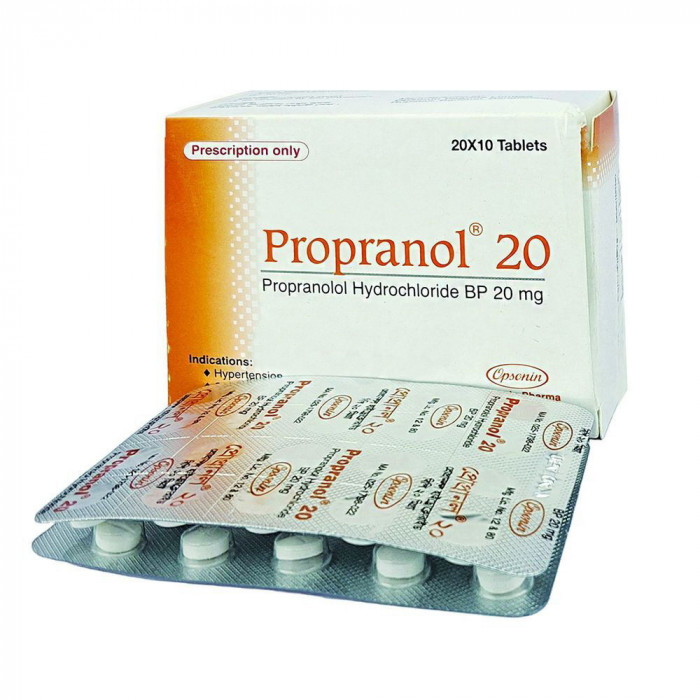
Manufacturer: Opsonin Pharma Limited
Generic: Propranolol Hydrochloride
Type: Tablet
Pack Size: 10 Pcs

Hurry and get discounts on all Apple devices up to 20%
Sale_coupon_15
20.00৳ Original price was: 20.00৳ .19.00৳ Current price is: 19.00৳ .
Propranolol is a non-selective beta-adrenergic blocker that inhibits the action of catecholamines on β1 and β2 receptors. This results in:
It is well absorbed orally, with peak plasma levels reached in 1–1.5 hours. The half-life ranges between 3–6 hours, and it is primarily eliminated through the urine after hepatic metabolism.
Propranolol is prescribed for the management of:
Adults:
Hypertension: 80 mg twice daily, titrated to 160–320 mg/day
Angina: 40 mg 2–3 times daily; maintenance 120–240 mg/day
Thyrotoxicosis: 10–40 mg 3–4 times daily
Anxiety: 40 mg once daily; may increase to 3 times/day
Migraine Prophylaxis: 40 mg 2–3 times daily; maintenance 80–160 mg/day
Pediatrics:
Neonates: 0.25–0.5 mg/kg 3 times/day
1 month–12 years: 0.25–1 mg/kg 3 times/day (max 5 mg/kg/day)
12–18 years: Start with 80 mg twice daily; maintain 160–320 mg/day
Bronchospasm or asthma
Cardiogenic shock
Advanced heart block (2nd or 3rd degree)
Severe bradycardia
Uncontrolled diabetes mellitus
Use caution with:
Calcium channel blockers (e.g. verapamil)
Beta-agonists (e.g. salbutamol, levosalbutamol)
Ergot derivatives
Lidocaine, phenobarbital – may alter therapeutic effects
Common:
Cold hands and feet
Fatigue, dizziness
Nausea, insomnia
Tingling sensations (paresthesia)
Use with caution in hepatic or renal impairment
Monitor closely in pregnancy and lactation
Gradual dose adjustment is advised to avoid withdrawal effects
Pregnancy Category C: Use only if clearly needed
Excreted in breast milk—use with caution in nursing mothers
Store in a cool, dry place, protected from light.
Keep out of reach of children.
Baby Mom
Diabetic Care
Health Devices
Medicines
Personal Care
Sexual Wellbeing
Vital Wellness
Vitamins Supplements
Women Care