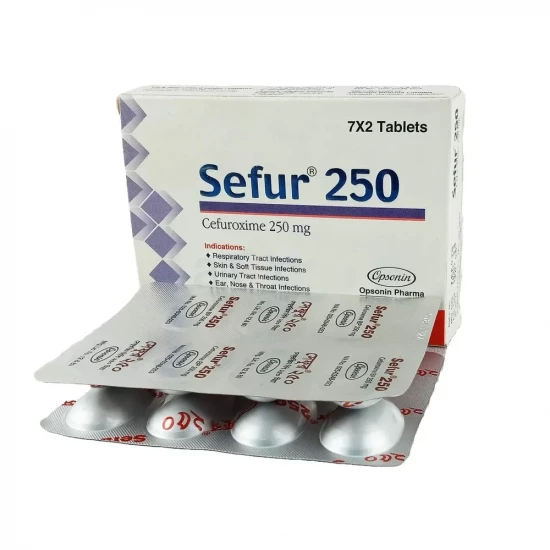
Sefur 250 is used to treat infections caused by bacteria that are sensitive to it, including:
- Pharyngitis/Tonsillitis caused by Streptococcus pyogenes
- Acute bacterial otitis media caused by Streptococcus pneumoniae, Haemophilus influenzae, Moraxella catarrhalis (including beta-lactamase-producing strains), or Streptococcus pyogenes
- Acute bacterial maxillary sinusitis caused by Streptococcus pneumoniae or Haemophilus influenzae (non-beta-lactamase-producing strains)
- Lower respiratory tract infections (including pneumonia) caused by Streptococcus pneumoniae, Haemophilus influenzae (including beta-lactamase-producing strains), Klebsiella spp., Staphylococcus aureus (penicillinase and non-penicillinase producing), Streptococcus pyogenes, and E. coli
- Acute bacterial exacerbations of chronic bronchitis and secondary bacterial infections of acute bronchitis caused by Streptococcus pneumoniae, Haemophilus influenzae (beta-lactamase-negative), or Haemophilus parainfluenzae (beta-lactamase-negative)
- Skin and soft tissue infections caused by Staphylococcus aureus (including beta-lactamase-producing strains) or Streptococcus pyogenes
- Urinary tract infections caused by E. coli or Klebsiella pneumoniae
- Bone and joint infections caused by Staphylococcus aureus (penicillinase and non-penicillinase producing strains)
- Gonorrhoea caused by penicillinase and non-penicillinase-producing Neisseria gonorrhoeae
- Early Lyme disease (erythema migrans) caused by Borrelia burgdorferi



 Baby Mom
 Diabetic Care
 Health Devices
 Medicines
 Personal Care
 Sexual Wellbeing
 Vital Wellness
 Vitamins Supplements
 Women Care