


-2%
 Baby Mom
 Diabetic Care
 Health Devices
 Medicines
 Personal Care
 Sexual Wellbeing
 Vital Wellness
 Vitamins Supplements
 Women Care
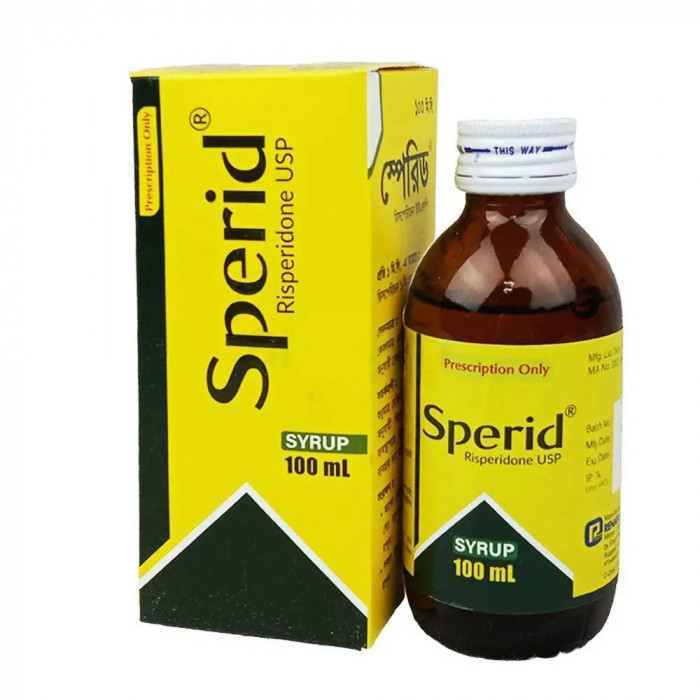
Manufacturer: Pharmadesh Laboratories Ltd.
Generic: Risperidone
Type: Syrup
Pack Size: 100ml

Hurry and get discounts on all Apple devices up to 20%
Sale_coupon_15
300.00৳ Original price was: 300.00৳ .294.00৳ Current price is: 294.00৳ .
Sperid tablets are prescribed for the treatment of:
Risperidone, the active ingredient in Sperid, is a selective monoaminergic antagonist with a high affinity for serotonin (5-HT2) and dopamine (D2) receptors. It also binds to alpha-1 adrenergic receptors and, with lower affinity, to H1 histamine and alpha-2 adrenergic receptors. However, Risperidone does not interact with cholinergic receptors.
As a potent D2 antagonist, Risperidone helps reduce positive symptoms of schizophrenia, such as hallucinations and delusions. Its combined serotonin and dopamine antagonism may lower the risk of extrapyramidal side effects (movement disorders) and improve negative (e.g., social withdrawal) and affective (mood) symptoms of schizophrenia.
Dosage & Administration:
Psychoses:
Mania:
Schizophrenia:
Always use this medication according to your doctor’s advice.
Drug Interactions:
Contraindications:
Do not use Sperid if you are allergic to risperidone or any of its components.
Side Effects:
Common side effects may include:
Pregnancy & Lactation:
Precautions:
Use Sperid cautiously if you have:
Therapeutic Class:
Atypical neuroleptic (antipsychotic) drug.
Storage Conditions:
Baby Mom
Diabetic Care
Health Devices
Medicines
Personal Care
Sexual Wellbeing
Vital Wellness
Vitamins Supplements
Women Care