


-2%
 Baby Mom
 Diabetic Care
 Health Devices
 Medicines
 Personal Care
 Sexual Wellbeing
 Vital Wellness
 Vitamins Supplements
 Women Care
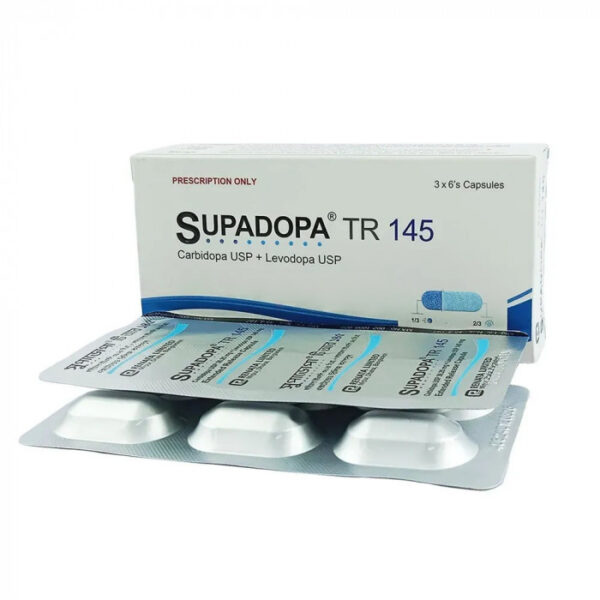
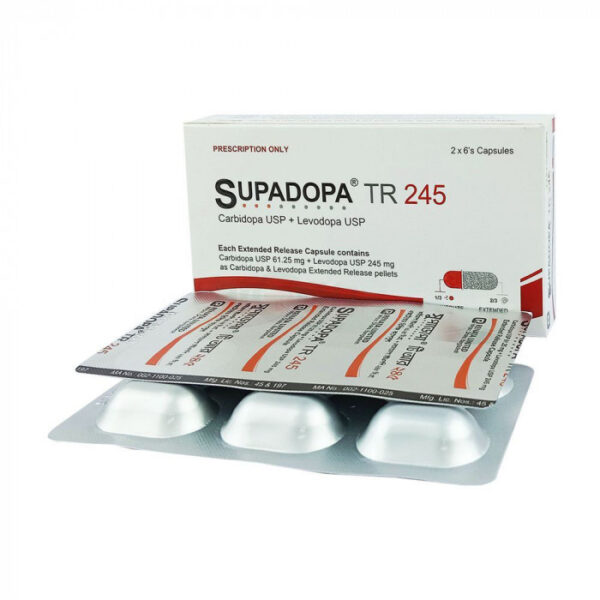
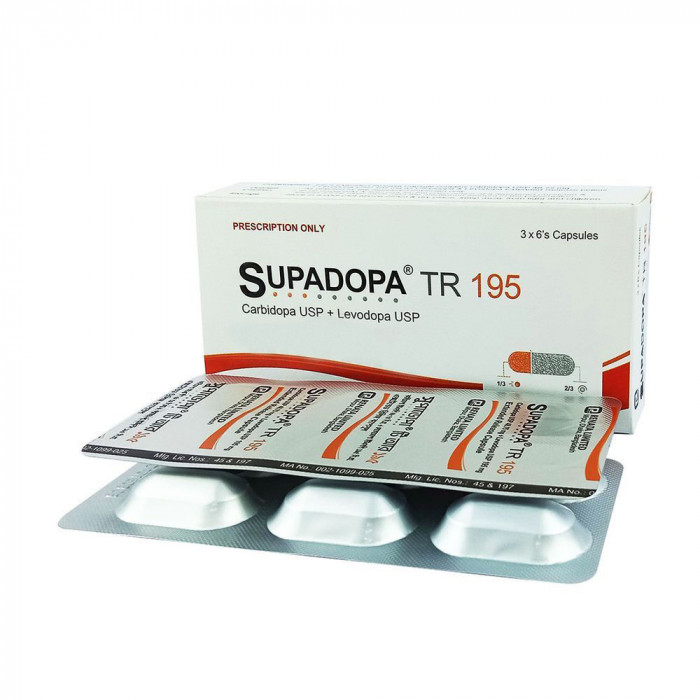
Manufacturer: Renata Limited
Generic: Carbidopa + Levodopa
Type: Capsule
Pack Size: 6 Pcs

Hurry and get discounts on all Apple devices up to 20%
Sale_coupon_15
300.00৳ Original price was: 300.00৳ .294.00৳ Current price is: 294.00৳ .
Supadopa TR is primarily prescribed for the treatment of Parkinson’s disease, a progressive neurodegenerative disorder characterized by tremors, rigidity, and bradykinesia (slowness of movement). Additionally, it is indicated for post-encephalitic parkinsonism, a condition that may arise as a consequence of viral encephalitis affecting the basal ganglia of the brain. Supadopa TR is also used in cases of parkinsonism induced by exposure to toxins, such as carbon monoxide poisoning or manganese intoxication.
Levodopa serves as a metabolic precursor to dopamine, a neurotransmitter that plays a crucial role in motor function. Since dopamine itself cannot cross the blood-brain barrier (BBB), levodopa is administered as it is capable of entering the brain, where it is then converted into dopamine. The increase in dopamine levels helps in alleviating the motor symptoms associated with Parkinson’s disease.
When levodopa is taken orally, a significant portion of it is prematurely converted to dopamine in peripheral tissues before reaching the brain, reducing its effectiveness. Carbidopa acts as a decarboxylase inhibitor, preventing the breakdown of levodopa in the periphery. This allows more levodopa to reach the brain, increasing its therapeutic effects while minimizing peripheral side effects such as nausea and vomiting.
Baby Mom
Diabetic Care
Health Devices
Medicines
Personal Care
Sexual Wellbeing
Vital Wellness
Vitamins Supplements
Women Care