


-5%
 Baby Mom
 Diabetic Care
 Health Devices
 Medicines
 Personal Care
 Sexual Wellbeing
 Vital Wellness
 Vitamins Supplements
 Women Care
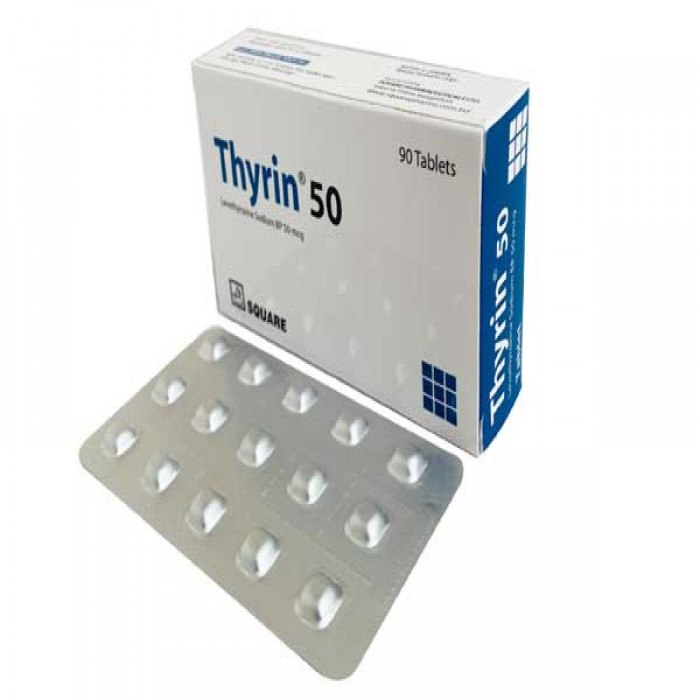
Manufacturer: Square Pharmaceuticals Ltd.
Generic: Levothyroxine Sodium 50 mcg
Type: Tablet
Pack Size: 15 Pcs

Hurry and get discounts on all Apple devices up to 20%
Sale_coupon_15
35.00৳ Original price was: 35.00৳ .33.25৳ Current price is: 33.25৳ .
Generic Name: Levothyroxine Sodium 50mcg
Manufacturer/Distributor: Square Pharmaceuticals Ltd.
Indications
A medication called Thyrin 50 is used to treat an underactive thyroid gland (hypothyroidism). It replaces the hormone that your thyroid gland was not producing in sufficient amounts and aids in regulating your body’s energy and metabolism.
Pharmacology
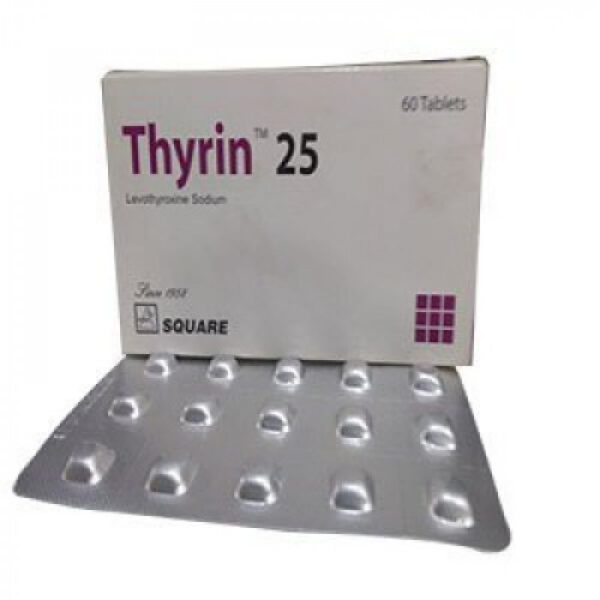
Synthetic Levothyroxine, also known as Thyroxine or T4, is a component of Thyrin 25 tablets and is identical to the thyroid hormone T4 found in nature. About 30% of T4 is converted into the much more active triiodothyronine in peripheral tissues (T3). TBG is the main transporter of T4 (Thyroxine Binding Globulin). This binding gives T4 a longer half-life in circulation by shielding it from metabolism and excretion. Only 0.03 percent of the total T4 in plasma is unbound. In the body, T4 has a half-life of 6 to 7 days. In hyperthyroidism, the half-life is 3–4 days, whereas, in hypothyroidism, it can be 9–10 days.
Dosage & Administration
Adult dose:
Hypothyroidism:
Interaction
Contraindications
Untreated subclinical or overt Thyrotoxicosis of any etiology, Acute Myocardial Infarction, Uncorrected Adrenal failure.
Side Effects
Too high a dosage may lead to symptoms of hyperthyroidism such as tachycardia, nervousness, tremor, headache, flushing, perspiration, and loss of weight. If necessary, treatment can be interrupted for a few days and then resumed at a lower dosage.
Pregnancy & Lactation
Precautions & Warnings
Storage Conditions
Protect from light and moisture by storing in a cool, dry place below 30°C. Keep out of children’s reach.
Baby Mom
Diabetic Care
Health Devices
Medicines
Personal Care
Sexual Wellbeing
Vital Wellness
Vitamins Supplements
Women Care