


-5%
 Baby Mom
 Diabetic Care
 Health Devices
 Medicines
 Personal Care
 Sexual Wellbeing
 Vital Wellness
 Vitamins Supplements
 Women Care

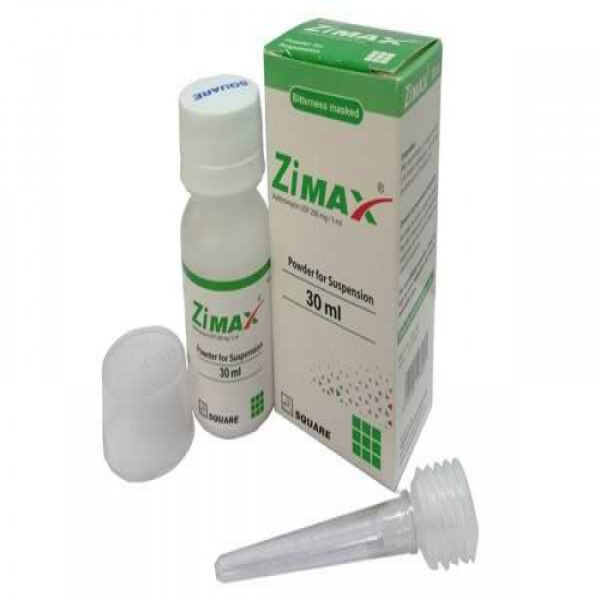
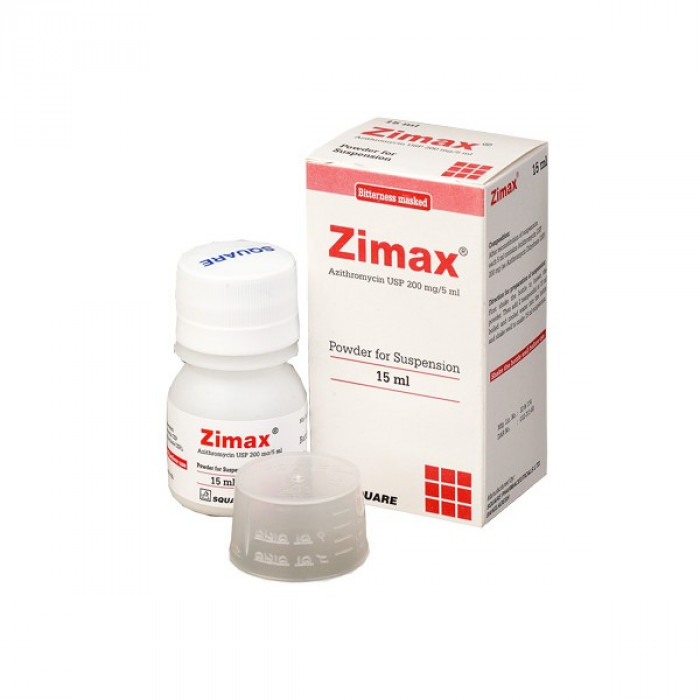
Manufacturer: Square Pharmaceuticals Ltd.
Generic: Azithromycin
Type: Suspension
Pack Size: 15ml

Hurry and get discounts on all Apple devices up to 20%
Sale_coupon_15
95.00৳ Original price was: 95.00৳ .90.25৳ Current price is: 90.25৳ .
Zimax contains Azithromycin, an acid-stable macrolide antibiotic that is readily absorbed after oral administration. Since it is resistant to degradation by gastric acid, it does not require enteric protection. Absorption is enhanced when taken on an empty stomach, with peak plasma concentrations generally achieved within 2.1–3.2 hours.
Azithromycin is actively transported by phagocytic cells to sites of infection, where high intracellular concentrations are released during phagocytosis. Tissue concentrations may exceed plasma concentrations by more than 50-fold, contributing to prolonged antibacterial activity.
The drug has an extended elimination half-life of approximately 68 hours, allowing convenient once-daily dosing while maintaining therapeutic tissue concentrations for several days. Elimination occurs mainly through biliary excretion as an unchanged drug, with approximately 6% excreted unchanged in urine.
Azithromycin inhibits bacterial protein synthesis by binding to the 50S ribosomal subunit of susceptible bacteria. This suppresses bacterial growth without interfering with nucleic acid synthesis.
It demonstrates activity against a broad spectrum of susceptible microorganisms, including:
Gram-positive bacteria
Gram-negative bacteria
Other susceptible organisms
The presence of beta-lactamase enzymes does not significantly affect azithromycin activity.
Community-Acquired Pneumonia
Pelvic Inflammatory Disease
When anaerobic pathogens are suspected, an additional antimicrobial with anaerobic coverage should be administered.
The safety and efficacy of injectable azithromycin have not been established in children and adolescents younger than 16 years.
Baby Mom
Diabetic Care
Health Devices
Medicines
Personal Care
Sexual Wellbeing
Vital Wellness
Vitamins Supplements
Women Care