


-5%
 Baby Mom
 Diabetic Care
 Health Devices
 Medicines
 Personal Care
 Sexual Wellbeing
 Vital Wellness
 Vitamins Supplements
 Women Care

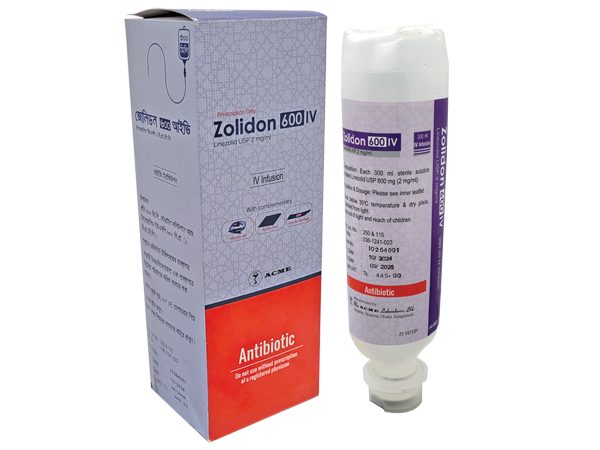
Manufacturer: Acme Laboratories Ltd.
Generic: Linezolid
Type: Infusion
Pack Size: 1 Pc

Hurry and get discounts on all Apple devices up to 20%
Sale_coupon_15
450.00৳ Original price was: 450.00৳ .427.50৳ Current price is: 427.50৳ .
Zolidon is prescribed for the treatment of various serious bacterial infections, including:
Limitations of Use:
Zolidon is not effective against Gram-negative bacterial infections. Its safety and effectiveness beyond 28 days of treatment have not been established in controlled clinical studies.
Linezolid is a synthetic antibiotic belonging to the oxazolidinone class. It is active against many Gram-positive aerobic bacteria, certain Gram-positive anaerobes, and some Gram-negative organisms.
It works by selectively blocking bacterial protein synthesis through binding to the 23S ribosomal RNA of the 50S ribosomal subunit. This action prevents formation of the functional 70S initiation complex, which is essential for bacterial protein production. Linezolid generally acts as a bacteriostatic agent against enterococci and staphylococci, while showing bactericidal activity against most streptococcal strains.
Administration
Recommended Dosages
| Infection | Pediatric Patients (Birth–11 years) | Adults & Adolescents (≥12 years) | Duration |
|---|---|---|---|
| Nosocomial pneumonia | 10 mg/kg every 8 hours (oral/IV) | 600 mg every 12 hours (oral/IV) | 10–14 days |
| Community-acquired pneumonia | 10 mg/kg every 8 hours (oral/IV) | 600 mg every 12 hours (oral/IV) | 10–14 days |
| Complicated skin and soft tissue infections | 10 mg/kg every 8 hours (oral/IV) | 600 mg every 12 hours (oral/IV) | 10–14 days |
| VRE infections | 10 mg/kg every 8 hours (oral/IV) | 600 mg every 12 hours (oral/IV) | 14–28 days |
| Uncomplicated skin infections | <5 years: 10 mg/kg every 8 hours; 5–11 years: 10 mg/kg every 12 hours | Adults: 400 mg every 12 hours; Adolescents: 600 mg every 12 hours | 10–14 days |
Neonates (<7 days old)
No dosage adjustment is required when switching between IV and oral formulations.
Hepatic Impairment
With Medicines
Linezolid is a reversible, non-selective monoamine oxidase inhibitor (MAOI) and may interact with:
These combinations may increase the risk of serotonin syndrome or excessive blood pressure elevation.
With Food
Patients should avoid consuming large amounts of tyramine-rich foods and beverages during treatment.
Zolidon should not be used in patients with:
Most side effects are mild to moderate.
Common adverse effects include:
Other reported reactions:
Pregnancy
Available evidence has not demonstrated a clear risk of major birth defects or pregnancy loss. However, linezolid should only be used during pregnancy when the potential benefit outweighs possible risks.
Breastfeeding
Linezolid passes into breast milk. Breastfeeding mothers should monitor infants for symptoms such as diarrhea or vomiting while receiving treatment.
No confirmed overdose cases have been reported. Management is supportive and symptomatic. Approximately 30% of the drug can be removed by hemodialysis over three hours. Data regarding removal by peritoneal dialysis or hemoperfusion are unavailable.
Oral Suspension
Important Notes
IV Infusion
Oxazolidinone Antibiotic
Zolidon formulations should be stored at room temperature (15°C-30°C), away from light and moisture. All medicines should be kept away from children.
Baby Mom
Diabetic Care
Health Devices
Medicines
Personal Care
Sexual Wellbeing
Vital Wellness
Vitamins Supplements
Women Care