


-2%
 Baby Mom
 Diabetic Care
 Health Devices
 Medicines
 Personal Care
 Sexual Wellbeing
 Vital Wellness
 Vitamins Supplements
 Women Care

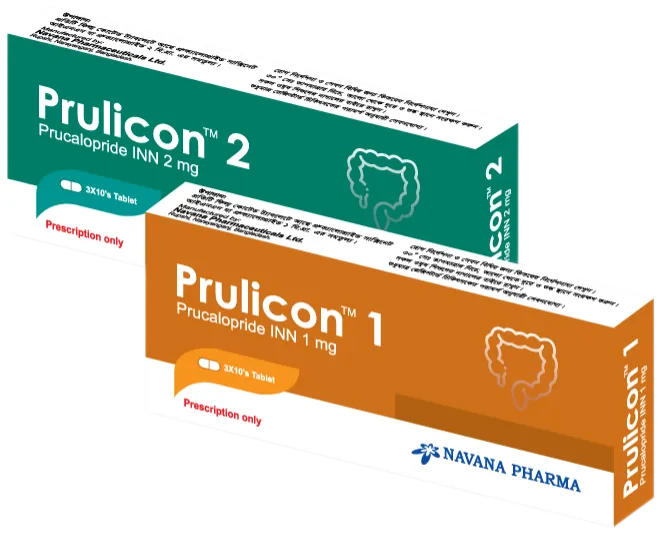
Manufacturer: Navana Pharmacuticals Ltd.
Generic: Prucalopride
Type: Tablet
Pack Size: 10 Pcs

Hurry and get discounts on all Apple devices up to 20%
Sale_coupon_15
240.00৳ Original price was: 240.00৳ .235.20৳ Current price is: 235.20৳ .
Prulicon contains prucalopride, a selective 5-HT4 receptor agonist that enhances the natural movement of the gastrointestinal tract. By stimulating 5-HT4 receptors, it promotes the release of acetylcholine, which increases intestinal muscle activity and helps move stool through the colon more effectively.
Prucalopride has minimal activity at other receptors and does not significantly interact with the hERG channel, which contributes to its favorable cardiovascular safety profile compared with some older medicines in this class.
Prulicon is prescribed for the symptomatic management of chronic constipation in adults when conventional laxatives do not provide sufficient relief.
Renal impairment:
Hepatic impairment:
Prulicon generally has a low potential for clinically significant drug interactions and is not expected to substantially interfere with CYP-mediated metabolism of other medicines.
Ketoconazole may increase prucalopride exposure by approximately 40%, although this increase is generally not considered clinically important. Similar effects may occur with potent P-glycoprotein inhibitors such as verapamil, cyclosporine A, and quinidine.
Studies have not shown clinically meaningful effects of prucalopride on the pharmacokinetics of warfarin, digoxin, alcohol, paroxetine, or oral contraceptives.
Prulicon should not be used in patients who:
The most frequently reported adverse effects include:
These effects are generally more common when treatment begins and often improve within a few days. Most reported reactions are mild to moderate.
Prucalopride is not recommended during pregnancy. Women who could become pregnant should use reliable contraception while receiving treatment.
Although animal studies have not demonstrated harmful effects on pregnancy or fetal development, there is insufficient human experience.
Because it is not known whether prucalopride passes into human breast milk, its use during breastfeeding is not recommended.
Prucalopride is primarily eliminated through the kidneys, so patients with significant renal impairment may require a lower dose.
Caution is advised in people with severe liver impairment, as limited clinical data are available for this group.
Severe diarrhea may reduce the effectiveness of oral contraceptive pills. An additional contraceptive method may therefore be necessary if severe diarrhea occurs.
Prulicon tablets contain lactose and should not be used by individuals with rare hereditary conditions such as galactose intolerance, Lapp lactase deficiency, or glucose-galactose malabsorption.
An excessive dose may intensify the usual effects of prucalopride and cause symptoms such as headache, nausea, and diarrhea.
There is no specific antidote. Treatment is mainly supportive and aimed at relieving symptoms. Significant fluid loss from vomiting or diarrhea may require replacement of fluids and electrolytes.
Osmotic purgatives
Store Prulicon at room temperature below 30°C, protected from unsuitable environmental conditions. Keep the desiccant inside the original bottle and dispense/store the tablets in their original container. Keep out of reach of children.
Baby Mom
Diabetic Care
Health Devices
Medicines
Personal Care
Sexual Wellbeing
Vital Wellness
Vitamins Supplements
Women Care