


-5%
 Baby Mom
 Diabetic Care
 Health Devices
 Medicines
 Personal Care
 Sexual Wellbeing
 Vital Wellness
 Vitamins Supplements
 Women Care
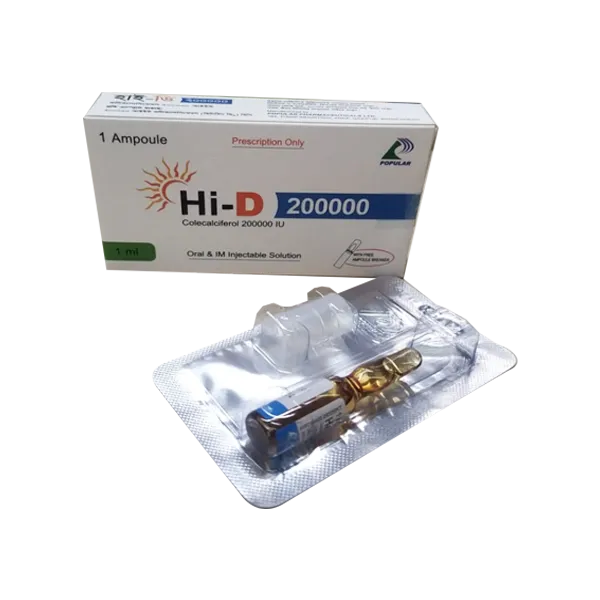
Manufacturer: Popular Pharmaceuticals Ltd.
Generic: Cholecalciferol – Vitamin D3
Type: Injection
Pack Size: 1 Pc

Hurry and get discounts on all Apple devices up to 20%
Sale_coupon_15
120.00৳ Original price was: 120.00৳ .114.00৳ Current price is: 114.00৳ .
Hi-D IM Injection is used for the prevention and treatment of conditions associated with Vitamin D deficiency, including:
Hi-D IM Injection (200,000 IU/ml)
Generic Name: Cholecalciferol (Vitamin D3)
This medicine may be taken with or without food. It can be administered orally or by intramuscular (IM) injection as directed by a healthcare professional.
Vitamin D Deficiency / Nutritional Supplementation
Osteoporosis Prevention and Treatment (Adults over 50 years)
Hypoparathyroidism
Nutritional Supplementation
Vitamin D-Resistant Rickets
Familial Hypophosphatemia
Cholecalciferol (Vitamin D3) is a fat-soluble vitamin that plays a vital role in maintaining calcium and phosphate balance in the body. It helps improve calcium absorption from the gastrointestinal tract, supports bone mineralization, and contributes to the development and maintenance of strong, healthy bones.
Do not use Hi-D IM Injection in the following situations:
Use with caution in patients with:
Adequate calcium and magnesium intake is important during Vitamin D therapy. Vitamin D may pass into breast milk; therefore, breastfeeding mothers should use it only under medical supervision.
Vitamin D3 is generally well tolerated when used as directed. However, excessive intake may lead to hypercalcaemia or calcium toxicity. Potential side effects include:
Use caution when taking Hi-D IM Injection with:
Store in a cool, dry place away from direct sunlight. Keep out of reach of children and use only as directed by a healthcare professional.
Baby Mom
Diabetic Care
Health Devices
Medicines
Personal Care
Sexual Wellbeing
Vital Wellness
Vitamins Supplements
Women Care