


-5%
 Baby Mom
 Diabetic Care
 Health Devices
 Medicines
 Personal Care
 Sexual Wellbeing
 Vital Wellness
 Vitamins Supplements
 Women Care
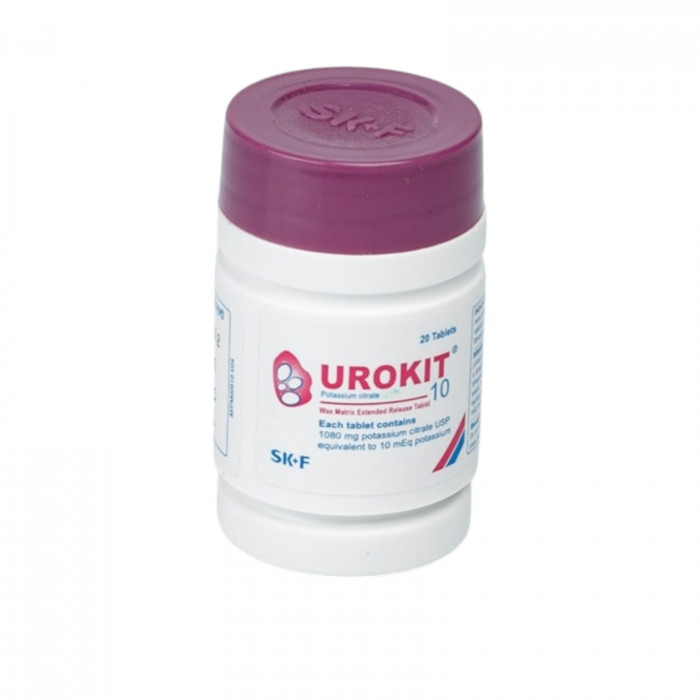
Manufacturer: SK+F
Generic: Potassium Citrate
Type: Tablet
Pack Size: 20s pack

Hurry and get discounts on all Apple devices up to 20%
Sale_coupon_15
300.00৳ Original price was: 300.00৳ .285.00৳ Current price is: 285.00৳ .
Potassium is an essential electrolyte that plays a critical role in maintaining various body functions, including muscle contraction, nerve signaling, and maintaining a healthy heartbeat. Urokit 10 is a potassium supplement administered as an injection to treat potassium deficiency (hypokalemia). Adult Dose: Oral Prophylaxis of Hypokalemia: 20 mEq daily for prevention, 40–100 mEq/day for treatment, divided into multiple doses if more than 20 mEq/day is needed. Child Dose: Oral: 0.5–2 mEq/kg every 12 hours. Potassium Citrate should not be used in patients with high potassium levels or conditions that predispose them to hyperkalemia, such as renal failure, uncontrolled diabetes, dehydration, or those on potassium-sparing medications. Patients with delayed gastric emptying, esophageal compression, intestinal obstruction, or active peptic ulcer disease should avoid this medication due to the risk of gastrointestinal complications. Potassium Citrate may not be effective and could worsen infections by raising urinary pH and promoting bacterial growth. Not recommended for patients with a glomerular filtration rate (GFR) of less than 0.7 mL/kg/min due to the risk of hyperkalemia and soft tissue calcification.
Baby Mom
Diabetic Care
Health Devices
Medicines
Personal Care
Sexual Wellbeing
Vital Wellness
Vitamins Supplements
Women Care