

-2%

Xorubin is indicated for:
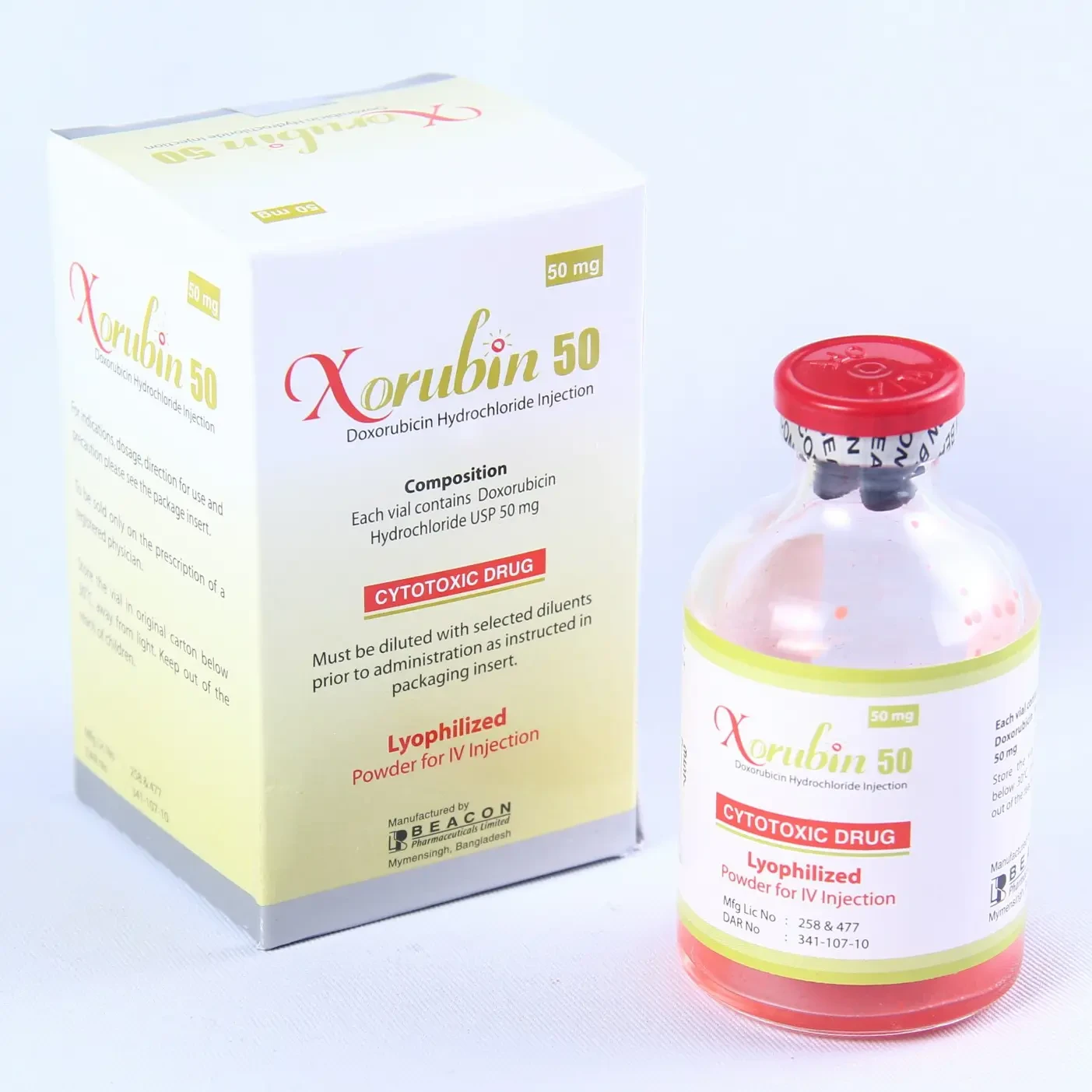
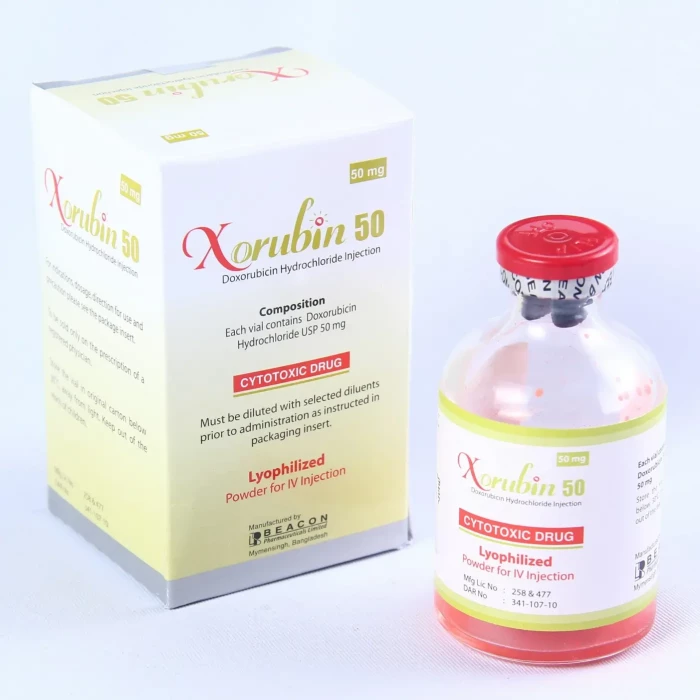
Xorubin 50 is an anti-cancer medication used to treat various types of cancer. Cancer occurs when cells grow and divide uncontrollably. This injection is commonly utilized as adjuvant chemotherapy in women with axillary lymph node involvement following breast cancer surgery. It is also effective in treating neuroblastoma (a cancer originating in nerve cells, mainly affecting children) and Wilms’ tumor (a type of kidney cancer in children).
Xorubin 50 Injection contains doxorubicin, which belongs to the class of anthracycline topoisomerase inhibitors. It works by blocking the enzyme topoisomerase II through DNA intercalation. This prevents the DNA double helix from uncoiling, thereby disrupting DNA and RNA synthesis.
Common side effects of Xorubin 50 include nausea, headache, abdominal discomfort, loss of appetite, vomiting, dizziness, mouth sores, fatigue, back pain, red-colored urine, diarrhea, and pain at the injection site. These side effects are usually mild and resolve on their own over time. However, if they persist or worsen, it is important to consult your doctor. This medication should only be administered by a trained healthcare professional, and the dosage will be determined by your doctor based on your medical condition.
Xorubin 50 should not be used if you are allergic to any of its components. It is contraindicated in individuals with severe myocardial insufficiency, a recent history of a heart attack, severe or persistent drug-induced myelosuppression, or severe liver disease. If you have any of these conditions, inform your doctor before starting treatment. Additionally, let your doctor know if you have cardiovascular, liver, or kidney conditions or if you are taking medications that induce CYP3A4 or CYP2D6 enzymes, as these can lead to adverse interactions. Xorubin 50 may cause harm to a developing fetus and is not recommended during pregnancy or breastfeeding. Inform your doctor if you are pregnant, planning to become pregnant, or nursing.