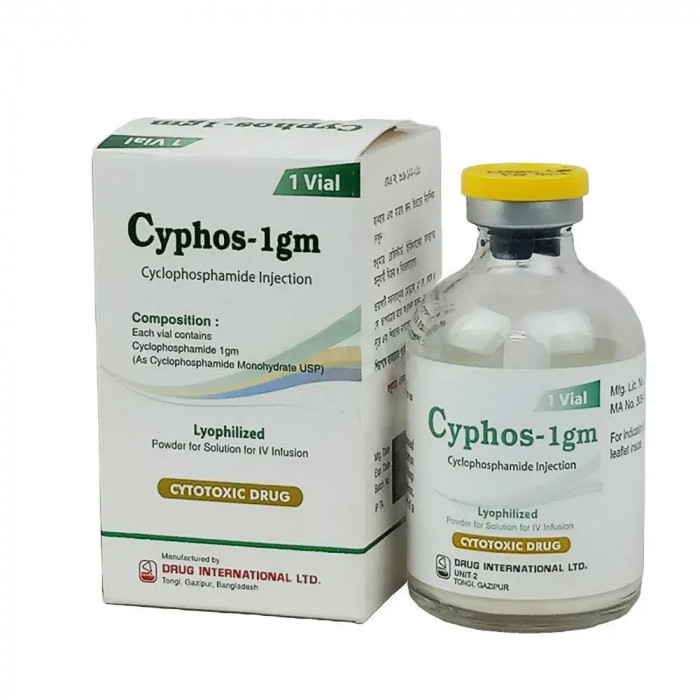
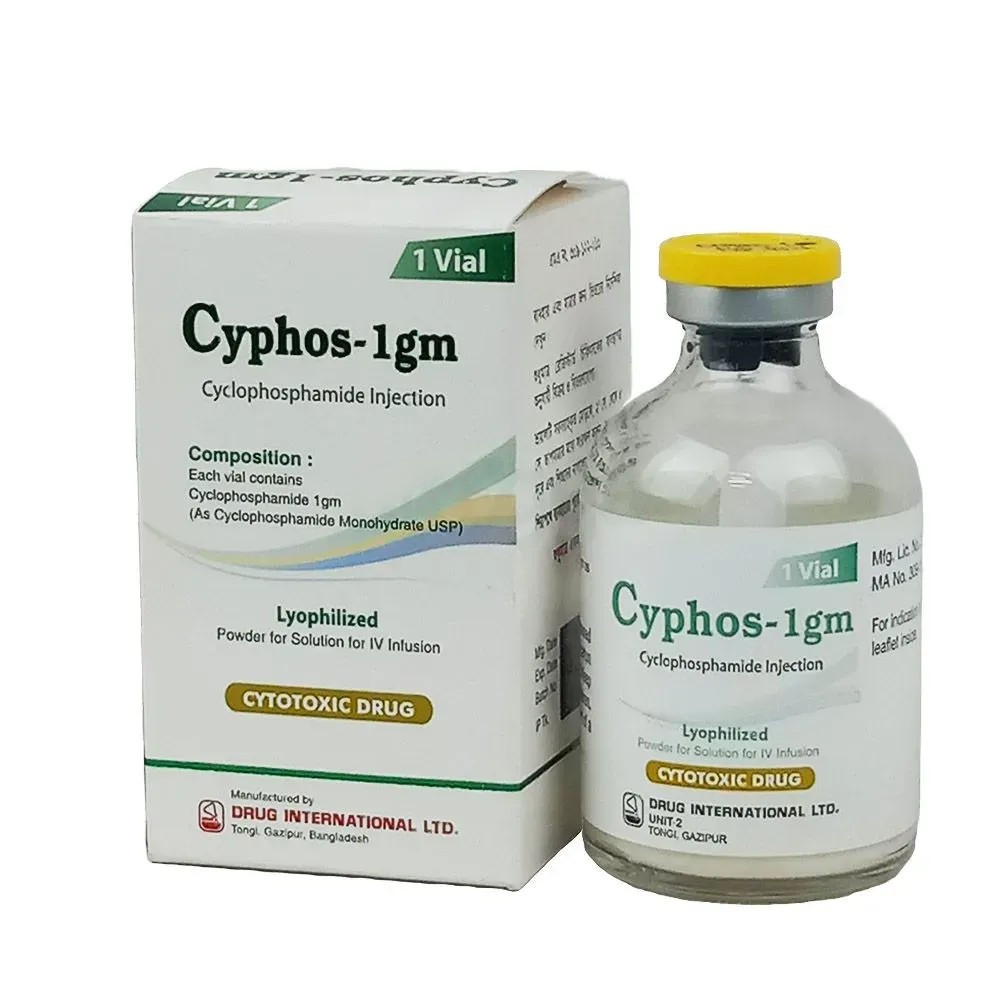
Cyclophosphamide, the active ingredient in Cyphos, is primarily metabolized in the liver into active alkylating agents. These metabolites inhibit the growth of rapidly dividing malignant cells by cross-linking DNA, interfering with cellular replication.
Key pharmacological properties:
Orally administered cyclophosphamide has a bioavailability exceeding 75%.
The unchanged drug has an elimination half-life ranging from 3 to 12 hours.
Primarily eliminated as metabolites, with 5–25% excreted unchanged in urine.
Cyclophosphamide itself has low plasma protein binding, while certain metabolites bind more extensively (>60%).
In patients with kidney impairment, metabolites may accumulate, though no consistent evidence suggests a need for dose adjustment.
Cyphos, while effective as a standalone treatment for certain malignancies, is often used in combination or sequentially with other antineoplastic medications. The following conditions are commonly responsive to Cyphos therapy:
Malignant Lymphomas: Stages III and IV (Ann Arbor staging system), including Hodgkin’s disease, lymphocytic lymphoma (both nodular and diffuse), mixed-cell type lymphoma, histiocytic lymphoma, and Burkitt’s lymphoma.
Multiple Myeloma
Leukemias: Chronic lymphocytic leukemia (CLL), chronic granulocytic leukemia (CGL) (not typically effective in the acute blastic crisis), acute myelogenous and monocytic leukemia, and acute lymphoblastic leukemia in children (used during remission to prolong its duration).
Mycosis fungoides: For advanced stages of the disease.
Neuroblastoma: For disseminated disease.
Adenocarcinoma of the Ovary
Retinoblastoma
Breast Carcinoma
Nonmalignant Indication:
Minimal Change Nephrotic Syndrome in Children: Cyphos is beneficial in select cases of biopsy-confirmed minimal change nephrotic syndrome in children. It is recommended for use only when corticosteroid therapy fails to achieve adequate response or causes significant side effects. However, it is not indicated for nephrotic syndrome in adults or other kidney diseases.